bolt Quick Answer (As of 2026)
Choosing the right LED bulb is not simply a matter of deciding how bright you want a room to be.
Choosing the right LED bulb is not simply a matter of deciding how bright you want a room to be.
Two bulbs can produce similar amounts of light yet create completely different atmospheres. One may make a living room feel warm and relaxing. Another can make the same space appear crisp, energetic, and highly functional.
The difference often comes down to color temperature.
Measured in Kelvin (K), color temperature describes the visual appearance of white light. Lower Kelvin values generally produce warmer, more yellow or amber-looking light, while higher values create cooler, whiter, or more bluish light.
This is why choosing between a warm white light bulb, cool white LED, or daylight lamp can significantly affect how a room looks and feels.
The right choice depends on what you're doing in the space.
A bedroom designed for relaxation may benefit from warm light bulbs. A kitchen may need a cleaner neutral white. A workshop, garage, or detailed work area may perform better with daylight-style illumination.
This guide explains the Kelvin scale, compares warm white, cool white, and daylight lighting, and shows how to select the right color temperature for every room in your home or workplace.
What Is Color Temperature?
Color temperature is measured in Kelvin (K).
It describes the apparent color of light rather than its brightness.
The concept can initially seem counterintuitive because lower Kelvin values correspond to warmer-looking light, while higher values appear cooler.
A simplified LED lighting guide looks like this
- Color Temperature
- Appearance
- Common Description
- Typical Applications
- 2200K–2700K
- Very warm, amber
- Candlelight / extra warm
- Decorative lighting, restaurants
- 2700K–3000K
- Warm, yellowish-white
- Warm white
- Bedrooms, living rooms
- 3500K–4000K
- Neutral white
- Cool/neutral white
- Kitchens, offices, bathrooms
- 5000K–6500K
- Crisp, cool white
- Daylight
- Garages, workshops, task areas
These ranges aren't absolute. Manufacturers may use different names for similar color temperatures.
That's why it's better to check the actual Kelvin rating rather than relying only on marketing terms such as "soft white," "cool white," or "daylight."
Warm White Light Bulbs: 2700K to 3000K
A warm white light bulb produces a soft, comfortable appearance with noticeable yellow or amber undertones.
This is the color temperature many people associate with traditional incandescent lighting.
It creates an environment that feels
- Relaxed
- Comfortable
- Intimate
- Cozy
- Welcoming
For this reason, warm light bulbs are popular in residential and hospitality settings.
Best Applications
- Warm white works particularly well in
- Bedrooms
- Living rooms
- Dining rooms
- Lounges
- Hotels
- Restaurants
- Reception areas
If you're trying to create an inviting atmosphere, warm white is usually a strong starting point.
Why Warm White Works Well in Bedrooms
Bedrooms are generally associated with relaxation rather than intense visual activity.
A 2700K or 3000K LED bulb can create a softer atmosphere that feels less visually harsh than a high-Kelvin daylight bulb.
Consider using warm white lighting for
- Bedside lamps
- Ceiling fixtures
- Wall sconces
- Decorative lamps
For reading in bed, you may want a dedicated task light with sufficient lumens rather than simply increasing the brightness of the entire room.
This allows you to maintain a relaxing ambient environment while providing focused illumination exactly where you need it.
Warm White for Living Rooms
The living room is one of the easiest places to use warm lighting successfully.
A warm white light bulb can complement
- Wooden furniture
- Upholstery
- Neutral walls
- Decorative artwork
- Textured surfaces
Warm light can also make certain interior finishes appear richer.
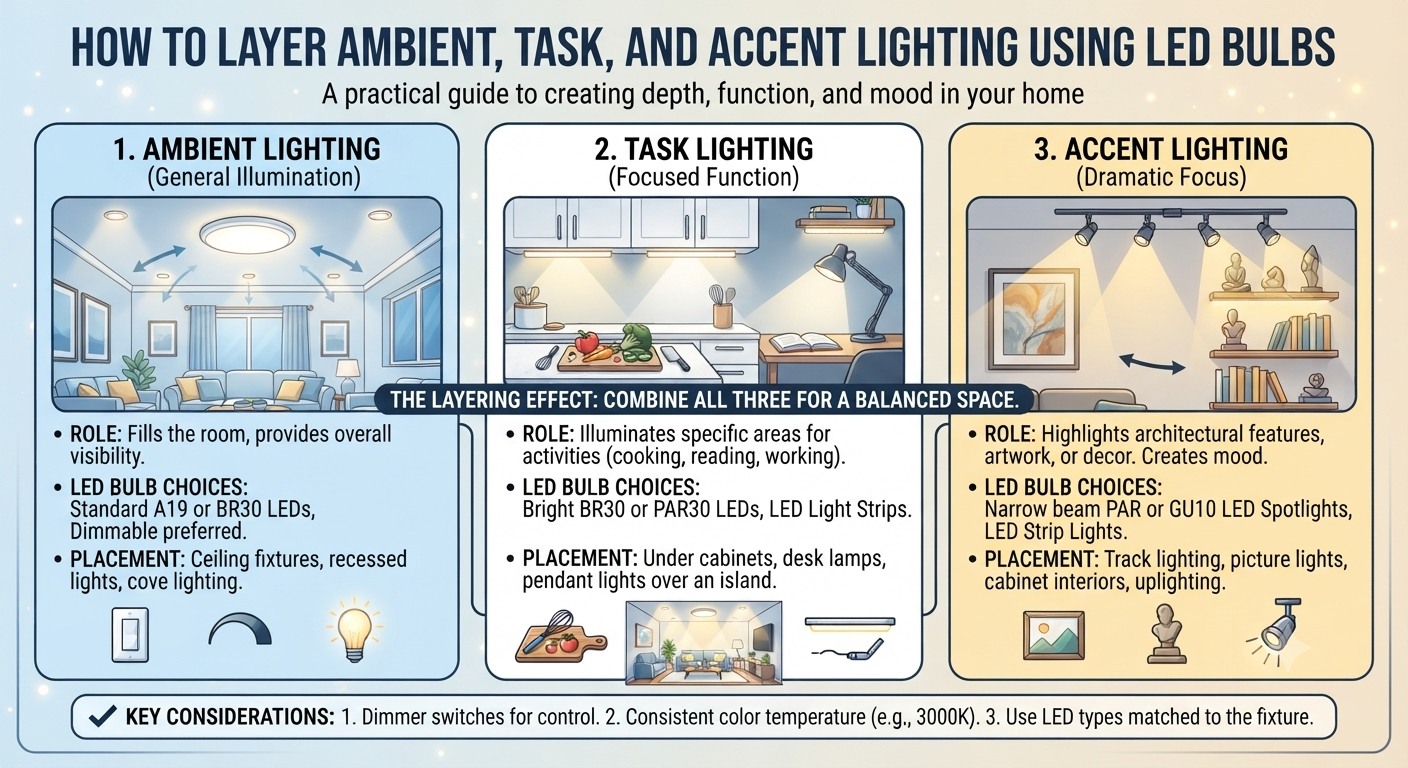
For a more sophisticated lighting design, combine warm white ceiling fixtures with
- Floor lamps
- Table lamps
- Wall lighting
- Accent lights
This creates layers rather than relying on one bright overhead fixture.
Yellow Light Bulbs: Are They Actually Yellow?
The term yellow light bulbs is often used casually to describe warm white LEDs.
Technically, most modern warm white LEDs aren't literally yellow.
They typically produce a warm white appearance with yellow, amber, or slightly orange undertones.
The effect becomes more pronounced as the Kelvin rating decreases.
For example
2700K looks warm and yellowish-white.
3000K looks warm but somewhat cleaner.
4000K appears neutral.
5000K looks much cooler and more daylight-like.
If a customer asks for "yellow light," it's worth clarifying whether they want
- Warm white general illumination, or
An actual yellow-colored decorative light.
These are different products.
Cool White: The Middle Ground
Cool white is often used to describe LED lighting in the approximate range of 3500K to 4500K, although terminology varies between manufacturers.
It provides a cleaner appearance than warm white without becoming as stark or bluish as high-Kelvin daylight lighting.
For many practical applications, 4000K neutral white is an excellent compromise.
It can provide
- Good visibility
- Clean appearance
- Balanced color
- Comfortable visual conditions
This makes it useful in spaces where people need to see clearly but don't necessarily want the colder appearance of 6000K lighting.
Where to Use Cool or Neutral White Light
- Neutral or cool white LED lighting can work well in
- Kitchens
- Bathrooms
- Offices
- Retail stores
- Classrooms
- Corridors
- Commercial spaces
A 4000K LED can be particularly effective in kitchens.
It provides enough visual clarity for food preparation and cleaning without making the room feel excessively clinical.
Daylight Lamps: 5000K to 6500K
A daylight lamp typically produces a cooler, crisper appearance.
Common daylight LED products fall around
- 5000K
- 5500K
- 6000K
- 6500K
These lights often appear distinctly cooler than warm white LEDs.
They can make a space feel
- Brighter
- More energetic
- Crisp
- Clean
- Functional
Daylight lighting is popular for environments where visual clarity and task visibility are priorities.
Common applications include
- Garages
- Workshops
- Warehouses
- Utility rooms
- Work areas
- Some offices
- Commercial spaces
However, daylight is not automatically the best choice for every room.
Warm White vs. Cool White vs. Daylight
The differences become clearer when viewed side by side.
Feature
- Warm White
- Cool/Neutral White
- Daylight
- Approx. Kelvin
- 2700K–3000K
- 3500K–4500K
- 5000K–6500K
- Visual Appearance
- Yellowish, warm
- Clean, balanced
- Crisp, cool
- Atmosphere
- Relaxing
- Functional
- Energetic
- Best For
- Bedrooms, living rooms
- Kitchens, offices
- Workshops, garages
- Hospitality
- Excellent
- Good
- Limited
- Task Visibility
- Good
- Excellent
- Excellent
- Cozy Feel
- Excellent
- Moderate
- Low
- Common Residential Use
- Very high
- High
- Moderate
There is no universal winner.
Color temperature is about matching the lighting environment to the activity.
Color Temperature Does Not Determine Brightness
This is an important distinction.
A 3000K bulb can be extremely bright.
A 6500K bulb can be relatively dim.
Kelvin measures color appearance.
Lumens measure light output.
Watts measure electrical power consumption.
These are three different specifications.
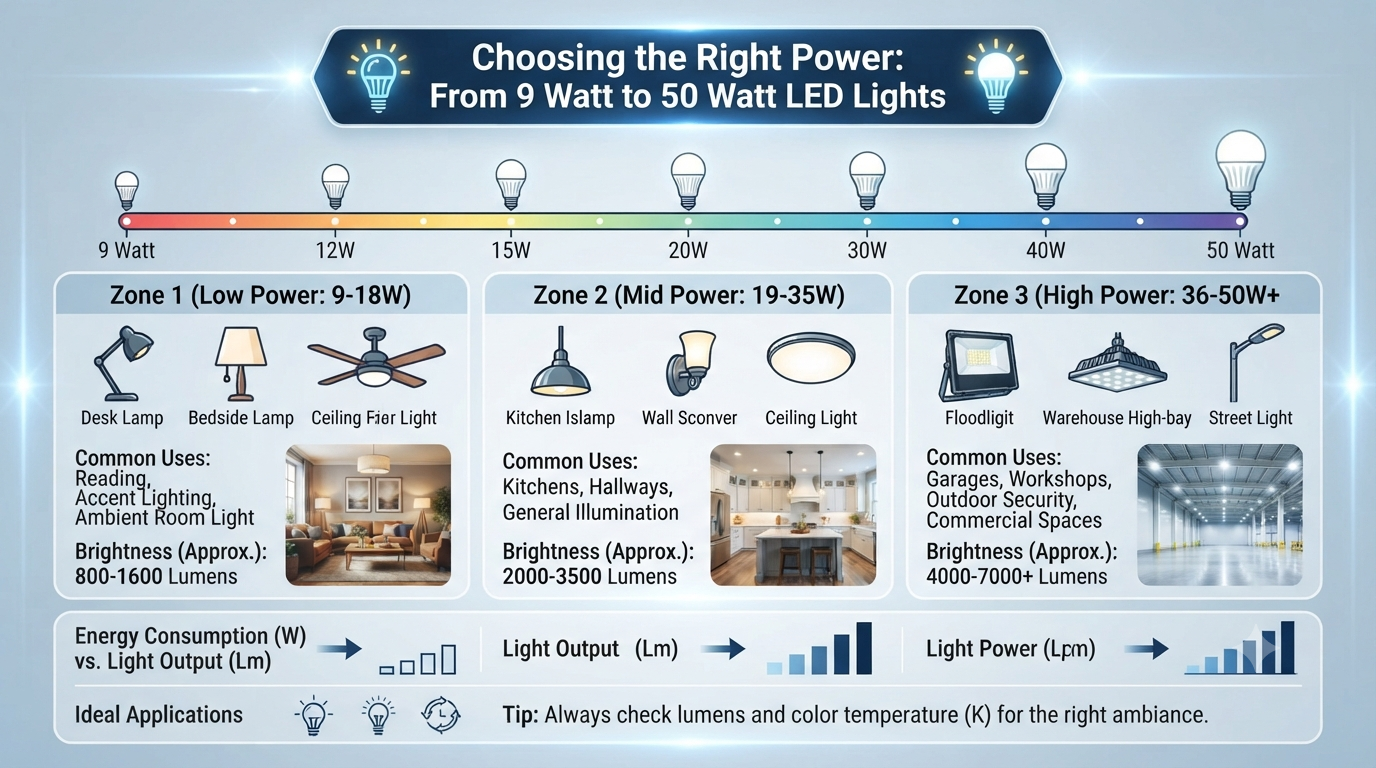
For example, when buying an LED bulb, you should evaluate
- Lumens: How much light do I need?
- Kelvin: What color should the light look like?
- Watts: How much electrical power does the bulb consume?
A good lighting design considers all three.
Choosing the Right Color Temperature for Each Room
- Bedroom
- Recommended: 2700K–3000K
Bedrooms generally benefit from warm lighting.
Use warm white for
- Ceiling lights
- Bedside lamps
- Wall sconces
If you read before sleeping, consider a focused reading light rather than using a very bright ceiling fixture.
Living Room
- Recommended: 2700K–3000K
- Warm white helps create a comfortable environment for
- Watching television
- Socializing
- Relaxing
- Reading
Multiple light sources at lower brightness often look better than one extremely bright overhead lamp.
Dining Room
- Recommended: 2700K–3000K
Warm lighting can create a welcoming dining atmosphere.
It also works well with wood furniture and warm interior finishes.
Pendant lights and chandeliers often look particularly attractive with warm white LED lamps.
Kitchen
- Recommended: 3000K–4000K
The kitchen is a multifunctional space.
You may need
- Ambient lighting
- Task lighting
- Under-cabinet lighting
A 3000K LED creates a warmer appearance.
A 4000K LED provides a cleaner, more neutral environment for food preparation.
For many modern kitchens, 3500K–4000K is an effective compromise.
Bathroom
- Recommended: 3000K–4000K
Warm white creates a softer atmosphere.
Neutral white can provide better visual clarity for
- Grooming
- Makeup application
- Shaving
- Cleaning
If accurate color perception is important, also pay attention to CRI, not just Kelvin.
Home Office
- Recommended: 3500K–5000K
A neutral or cooler light can create a more focused working environment.
However, avoid choosing extremely cool lighting simply because it appears brighter.
Glare and excessive contrast can cause visual discomfort.
A high-quality 4000K LED with good CRI may be a better choice than a harsh 6500K lamp.
Garage and Workshop
- Recommended: 4000K–6500K
These spaces often benefit from cooler lighting.
A daylight lamp can help improve visibility when working with
- Tools
- Machinery
- Vehicles
- Electrical equipment
- Detailed components
The exact choice depends on the task and the user's visual preference.
Color Temperature and Interior Design
The same room can look completely different under different LED lighting.
Warm light tends to enhance
- Wood
- Beige
- Cream
- Brown
- Warm fabrics
- Cooler light can emphasize
- White
- Gray
- Blue
- Silver
- Modern finishes
This is why color temperature should be selected alongside interior materials.
Imagine installing a 6500K daylight lamp in a room filled with warm wood furniture.
The furniture may appear less inviting.
Now imagine using 2700K warm white in a modern white kitchen.
The surfaces may take on a noticeably warmer tone.
Neither is inherently wrong.
The goal is visual harmony.
CRI and Color Temperature: The Two Work Together
Color temperature tells you whether light appears warm or cool.
CRI tells you how accurately that light reveals colors.
A high-CRI LED can make
- Food look more natural
- Clothing colors appear more accurate
- Paint colors easier to evaluate
- Skin tones look more natural
- This is especially important in
- Kitchens
- Bathrooms
- Retail environments
- Dressing rooms
- Art spaces
If you're choosing lighting for color-sensitive applications, don't stop at Kelvin.
Check the CRI specification as well.
Should Every Room Use the Same Color Temperature?
Not necessarily.
A home doesn't need to use one Kelvin rating everywhere.
In fact, using different color temperatures based on function can create a better lighting experience.
For example
- Bedroom: 2700K
- Living room: 3000K
- Kitchen: 4000K
- Bathroom: 4000K
- Garage: 5000K
This creates a practical hierarchy.
The warmer rooms feel relaxed.
The functional spaces feel clearer and more energetic.
However, avoid excessive variation in spaces that visually connect.
An open-plan living room and kitchen may look more cohesive if their lighting temperatures are reasonably close.
Why Mixing Color Temperatures Can Look Bad
- Imagine a living room with
- 2700K ceiling lights
- 4000K wall lights
- 6500K floor lamp
The room may appear visually inconsistent.
Different areas can look like they're under completely different lighting conditions.
This is especially noticeable in open-plan spaces.
For a cohesive design, try to keep primary ambient lighting within a consistent color-temperature range.
You can still use accent lighting with a different temperature when there is a deliberate design reason.
Warm White or Daylight for Reading?
The answer depends on the reader.
Many people find neutral or cool white light comfortable for detailed reading because it provides a crisp appearance.
Others prefer warm white because it feels more relaxing.
The more important factors are often
- Sufficient lumens
- Low glare
- Good CRI
- Proper positioning
- Even illumination
A poorly positioned 6500K light can be more uncomfortable than a well-designed 3000K reading lamp.
Color temperature alone does not determine visual comfort.
Warm Light vs. Daylight for Security
Outdoor security lighting often uses neutral or cool white LEDs because they provide clear visibility.
Daylight-style lighting can make an area appear bright and highly visible.
However, excessive brightness can create glare and harsh shadows.
For security applications, consider
- Lumens
- Beam angle
- Mounting height
- Motion detection
- Color temperature
- Light spill
A well-positioned 4000K floodlight may provide better practical visibility than an overly bright 6500K fixture.
Does Color Temperature Affect Energy Consumption?
Not significantly by itself.
A 3000K LED and a 5000K LED with similar lumen output can have different efficacy depending on their design and phosphor technology, but color temperature is not the primary factor determining energy savings.
The bigger factors are
- LED efficiency
- Driver efficiency
- Lumen output
- Operating hours
- Fixture design
If energy efficiency is your priority, compare lumens per watt.
A high-efficiency 4000K LED may consume less electricity than a poorly designed 3000K product producing the same useful light.
Choosing the Right Kelvin Rating: A Simple Method
Before buying a bulb, ask three questions.
What Is the Room Used For?
- Relaxation?
- Work?
- Cooking?
- Detailed tasks?
- What Atmosphere Do You Want?
- Warm and cozy?
- Clean and neutral?
- Bright and energetic?
- What Are the Existing Finishes?
- Warm wood?
- White cabinets?
- Gray walls?
- Colorful décor?
Then select the color temperature.
A simple rule of thumb
- Relax → 2700K–3000K
- General activity → 3500K–4000K
- Detailed tasks → 4000K–6500K
These are starting points rather than strict rules.
Pro Tips for Buying LED Bulbs
- Pro Tip 1: Buy Samples First
If you're replacing many bulbs, buy one or two samples first.
Install them in the actual room.
Observe them during
- Daytime
- Evening
- Different weather conditions
Lighting can look different in a showroom than it does in your home.
Pro Tip 2: Don't Trust Names Alone
"Cool white" doesn't always mean exactly the same Kelvin rating across brands.
Check the specification.
Pro Tip 3: Consider CRI
Especially for kitchens, bathrooms, and dressing areas.
Pro Tip 4: Match Connected Spaces
Avoid dramatic color-temperature differences between adjacent rooms unless the contrast is intentional.
Pro Tip 5: Think About Dimming
A dimmable warm white bulb can provide even greater flexibility.
Pro Tip 6: Consider Tunable White LEDs
If you're unsure whether you prefer warm or cool lighting, tunable-white smart bulbs can provide adjustable color temperature.
Common Mistakes When Choosing Color Temperature
- Mistake 1: Choosing the Highest Kelvin Because It "Looks Brighter"
Cooler light may appear more energetic, but Kelvin does not measure brightness.
Check lumens.
Mistake 2: Using Daylight Everywhere
A 6500K daylight lamp may work beautifully in a workshop but feel too harsh in a bedroom.
Mistake 3: Ignoring the Interior
The same bulb can look different depending on wall color and furniture.
Mistake 4: Mixing Random Color Temperatures
Inconsistent lighting can make a room feel disjointed.
Mistake 5: Ignoring CRI
Color temperature doesn't tell you how accurately colors will appear.
Mistake 6: Choosing Based Only on Product Packaging
Look at the actual Kelvin rating, lumen output, CRI, and energy efficiency.
Frequently Asked Questions
- What is the best color temperature for a warm white light bulb?
For most residential applications, 2700K to 3000K provides a comfortable warm white appearance. Use 2700K for a softer, more traditional atmosphere and 3000K when you want warm light with a slightly cleaner appearance.
Are warm light bulbs better for bedrooms?
Generally, yes. Warm light bulbs in the 2700K–3000K range are commonly preferred for bedrooms because they create a relaxed and comfortable environment. However, individual preferences vary, and brightness and glare control are also important.
What is the difference between a daylight lamp and a warm white bulb?
A daylight lamp generally produces a cooler, crisper light, often around 5000K–6500K. A warm white bulb typically falls around 2700K–3000K and produces a softer, yellowish-white appearance. Daylight lighting is often used for work areas, garages, and workshops, while warm white is common in bedrooms and living spaces.
Are yellow light bulbs the same as warm white bulbs?
Usually, when people refer to yellow light bulbs for home lighting, they mean warm white LEDs in the approximate 2700K–3000K range. These bulbs produce a warm, yellowish-white appearance rather than a pure yellow light. If you specifically want colored yellow illumination, you need a dedicated colored LED product.
Final Takeaway: Match the Light to the Space
Choosing between a warm white light bulb, cool white LED, and daylight lamp is ultimately about matching light to purpose.
Use 2700K–3000K warm light bulbs where comfort and relaxation matter.
Choose 3500K–4000K neutral or cool white for kitchens, bathrooms, offices, and general-purpose areas where clarity is important.
Consider 5000K–6500K daylight lighting for garages, workshops, utility rooms, and detailed work environments.
But don't make your decision based on Kelvin alone.
Look at lumens for brightness, CRI for color quality, watts for energy consumption, and beam distribution for how the light reaches the space.
And remember: the best lighting system is rarely the one with the highest number on the package. It's the one that makes the room perform better and feel right for the people using it.
Choose warm light when you want to relax, neutral light when you want balance, and daylight when you need crisp visual clarity.