bolt Quick Answer (As of 2026)
Finding a reliable LED bulbs manufacturer is one of the most important decisions for anyone involved in the lighting business. Whether you are a distributor, importer, retailer, electrical contractor, project supplier, or building your own private...
Finding a reliable LED bulbs manufacturer is one of the most important decisions for anyone involved in the lighting business. Whether you are a distributor, importer, retailer, electrical contractor, project supplier, or building your own private-label lighting brand, the quality of the manufacturer directly affects your product performance, customer satisfaction, warranty costs, and reputation.
The challenge is that LED bulbs can look almost identical from the outside. Two 12W bulbs may have the same shape, color, and packaging style while using completely different internal components. One may deliver stable brightness for years; the other may develop flickering, overheating, color shifting, or premature failure.
The difference is usually found inside the bulb.
LED chips, drivers, PCBs, capacitors, thermal materials, diffusers, and housings all contribute to the finished product. But sourcing quality components is only half the equation. The manufacturer must also know how to select, assemble, test, and control those components consistently.
This guide explains how to evaluate an LED bulbs manufacturer before committing to a supplier. We will examine the critical components inside an LED bulb, how to verify quality, what questions to ask manufacturers, how to evaluate samples, and which warning signs should make you reconsider a supplier.
Why the Manufacturer Matters More Than the Product Brochure
A product datasheet can tell you that an LED bulb is 10W, produces 1,000 lumens, and has a 25,000-hour lifespan.
But who guarantees that every production batch actually meets those specifications?
That is where the manufacturer becomes critical.
A reliable manufacturer should have control over
- Component sourcing
- Incoming material inspection
- LED chip selection
- Driver design
- PCB quality
- Thermal management
- Assembly processes
- Electrical testing
- Photometric testing
- Aging and burn-in procedures
- Final quality inspection
- Batch traceability
A supplier that simply purchases finished bulbs from an unknown factory may have limited control over these factors.
For serious buyers, the goal should be to find a manufacturer that can demonstrate repeatable quality, not merely provide an attractive sample.
Start With the LED Chip
The LED chip or LED package is the primary light-producing component in the bulb. Its quality influences brightness, efficiency, color consistency, and long-term lumen maintenance.
When evaluating a manufacturer, ask what LED technology or LED package is being used.
Look for information about
- Luminous efficacy
- Color consistency
- CRI
- Color binning
- Forward voltage
- Operating temperature
- Lumen maintenance
- LED package reliability
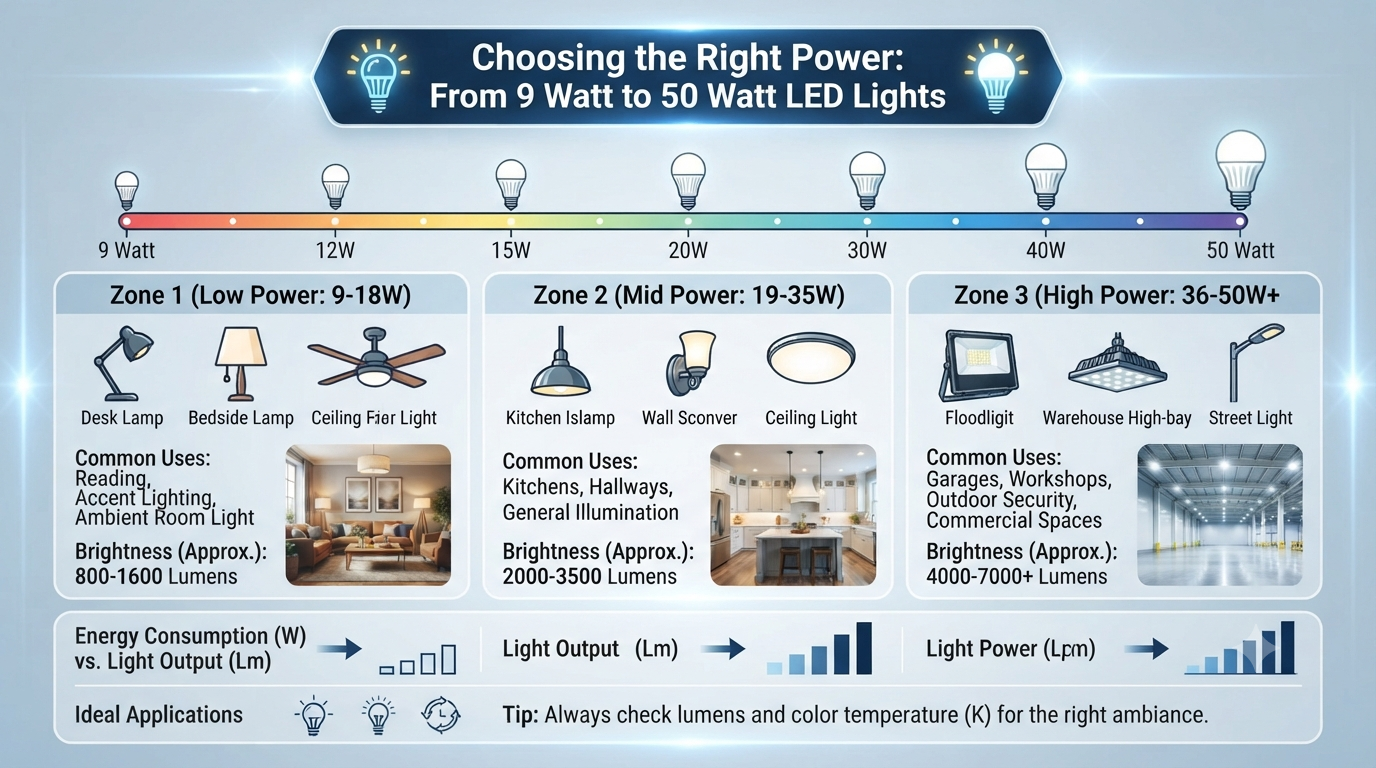
- Lumens vs. Watts
Do not judge LED quality based only on wattage.
Watts measure electrical consumption. Lumens measure light output.
For example
- 10W at 700 lumens = 70 lm/W
- 10W at 1,000 lumens = 100 lm/W
- 10W at 1,200 lumens = 120 lm/W
All three consume 10W, but their lighting performance is very different.
A professional LED bulbs manufacturer should provide actual lumen output for the complete lamp rather than relying solely on theoretical LED chip performance.
Pro Tip
- Ask whether the stated lumen output refers to
- LED chip output,
- LED module output, or
Finished lamp output.
The third figure is generally the most useful when comparing products.
Investigate the LED Driver
If the LED chip is the heart of the lighting system, the driver is its power-management system.
The driver converts and regulates incoming electrical power so the LEDs receive the correct operating conditions.
A poor driver can cause
- Flickering
- Buzzing
- Premature failure
- Excessive heat
- Poor power factor
- Voltage instability
- Reduced LED lifespan
- Increased sensitivity to electrical surges
A reliable LED bulbs manufacturer should be able to explain the driver design rather than simply saying that the bulb uses an "IC driver."
Ask about
- Input voltage range
- Driver efficiency
- Power factor
- Surge protection
- Over-voltage protection
- Over-temperature protection
- Driver operating temperature
- Capacitor quality
- Flicker performance
For markets where voltage fluctuations are common, surge protection and a suitable input-voltage range become especially important.
Check the Quality of Capacitors and Electronic Components
The driver contains several electronic components that influence the bulb's operating life.
Capacitors deserve particular attention.
In low-cost LED bulbs, manufacturers may reduce costs by using lower-grade components or components with insufficient temperature ratings.
A high-quality manufacturer considers
- Capacitor brand
- Temperature rating
- Rated lifetime
- Operating conditions
- Electrical stress
- Component derating
The relationship between heat and electronics is critical.
A capacitor operating continuously at high temperatures can age faster than one operating in a properly designed thermal environment.
This is one reason a bulb that performs perfectly during a short sample test may still fail prematurely in real-world use.
Pro Tip: When evaluating a manufacturer, ask for the complete driver specification or request permission to inspect a sample internally. A serious supplier should understand why component selection matters.
Evaluate the PCB Quality
The printed circuit board (PCB) provides the electrical and mechanical platform for the LED components.
Important considerations include
- PCB material
- Copper thickness
- Thermal conductivity
- Solder quality
- Component layout
- Electrical spacing
- Manufacturing consistency
For higher-power LED bulbs, thermal management at the PCB level becomes increasingly important.
The LED generates heat at the junction, and the design must provide an effective path for that heat to move away from sensitive components.
A manufacturer that pays attention to PCB design is generally better positioned to produce stable, reliable LED products.
Don't Overlook Heat Dissipation
Heat is one of the major enemies of LED longevity.
LED bulbs are highly efficient, but they still produce heat. If that heat becomes trapped inside the bulb, component temperatures can rise significantly.
A good manufacturer should consider
- Heat sink design
- Aluminum or thermally conductive materials
- Thermal interface materials
- Internal airflow
- Housing geometry
- Driver placement
The thermal design should also match the intended application.
A bulb installed in an open fixture may operate at a much lower temperature than the same bulb installed inside an enclosed ceiling fitting.
Why does this matter?
- Excessive heat can accelerate
- Lumen depreciation
- Color shift
- Driver aging
- Capacitor failure
- LED degradation
When sourcing products, ask whether the manufacturer has conducted thermal testing under realistic ambient conditions.
Verify the Diffuser and Optical Design
The diffuser determines how light is distributed and how the bulb appears visually.
A good diffuser should provide appropriate
- Light transmission
- Uniformity
- UV resistance
- Heat resistance
- Mechanical durability
Cheap diffuser materials may become yellow, brittle, or discolored over time.
The optical design also affects the beam angle.
A wide beam angle may be suitable for general room illumination, while a narrower distribution may be more appropriate for accent or directional applications.
The manufacturer should be able to provide the beam angle and, ideally, photometric information.
Don't assume two bulbs with the same wattage distribute light in the same way.
Consider Color Temperature and CRI
A reliable manufacturer should maintain consistency in both color temperature and color rendering.
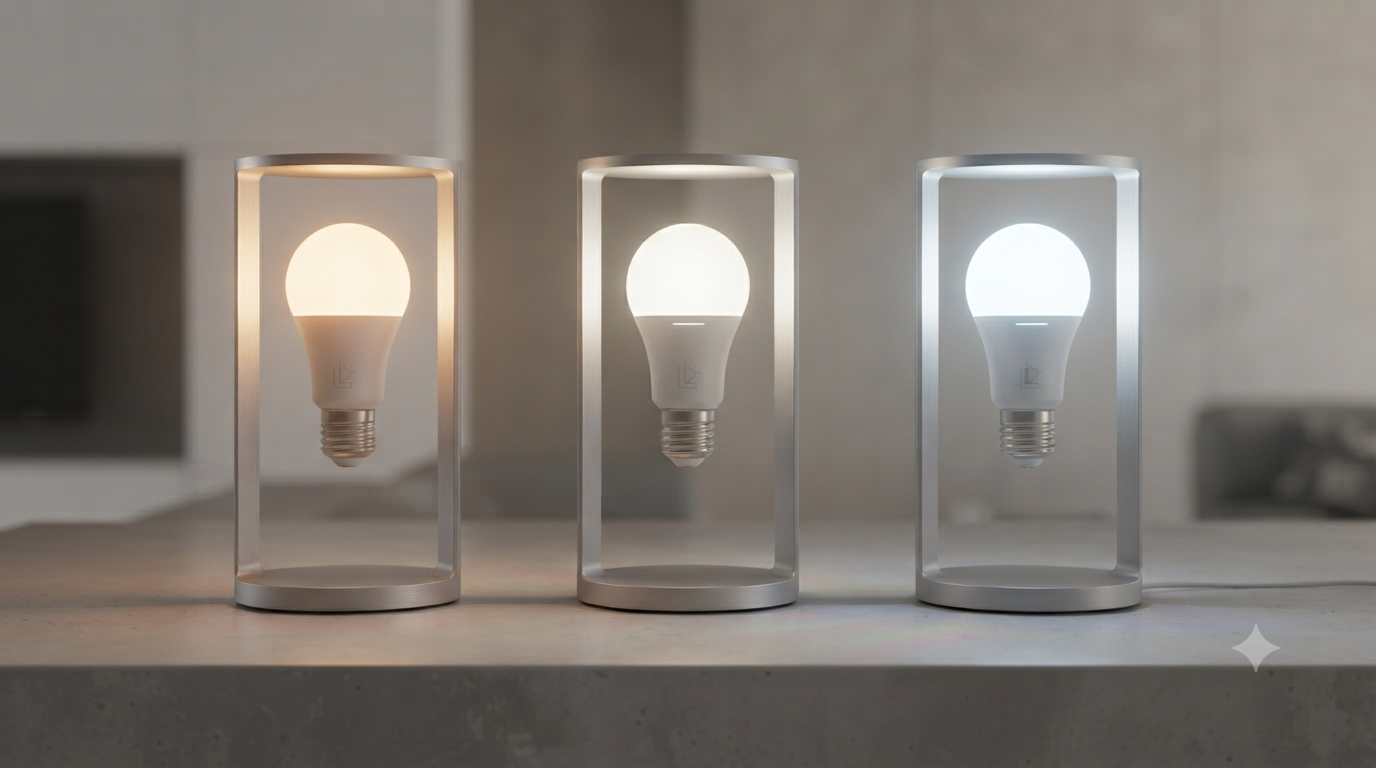
Common LED color temperatures include
- Color Temperature
- Appearance
- Typical Use
- 2700K–3000K
- Warm white
- Bedrooms, hospitality
- 3500K–4000K
- Neutral white
- Offices, kitchens
- 5000K–6500K
- Cool/daylight
- Shops, workshops, warehouses
If you are sourcing thousands of bulbs for a commercial project, color consistency becomes particularly important.
Imagine installing hundreds of 6500K bulbs and then discovering that different production batches have visibly different shades of white.
The lighting may look inconsistent even though every bulb carries the same nominal specification.
CRI
The Color Rendering Index (CRI) indicates how accurately a light source reveals colors.
For general applications, CRI 80+ is often suitable. Higher-CRI products may be preferred for:
Retail stores
- Galleries
- Hospitality
- Healthcare
- Photography
- High-end residential spaces
Ask your manufacturer to provide actual CRI specifications rather than vague descriptions such as "premium color quality."
Ask About Power Factor
Power factor is often ignored in consumer-level purchasing but becomes more relevant in commercial and industrial installations.
A low power factor can increase the apparent current drawn by electrical equipment, which may affect system efficiency and electrical infrastructure.
When sourcing LED bulbs for large projects, ask the manufacturer for the rated power factor.
Compare products based on
- Rated wattage
- Lumens
- Power factor
- Efficiency
A technically superior bulb should not be evaluated solely by its purchase price.
Check Surge Protection
LED bulbs can be sensitive to electrical surges.
Surges may occur due to
- Lightning
- Switching operations
- Grid disturbances
- Electrical faults
The level of surge protection required depends on the application and local electrical environment.
A reliable manufacturer should be able to specify the surge protection capability of its products.
This is particularly important for
- Outdoor lighting
- Industrial facilities
- Commercial buildings
- Areas with unstable power grids
If your target market experiences frequent voltage fluctuations, explain this to the manufacturer before selecting a product.
The right bulb specification may be different from one intended for a stable electrical network.
Examine the Manufacturer's Quality-Control System
A reliable manufacturer should have a documented quality-control process.
A typical process may include
- Incoming Quality Control
Components are inspected when they arrive at the factory.
In-Process Quality Control
Production is monitored during assembly.
Electrical Testing
Finished products are checked for electrical performance and safety.
Photometric Testing
Lumen output, color characteristics, and optical performance are evaluated.
Aging or Burn-In
Products may be operated for a defined period to identify early failures.
Final Inspection
The finished product is inspected before packaging.
Batch Traceability
Production batches are identified so defects can be traced to their source.
Ask the manufacturer to explain these processes.
If the answer is simply, "We check everything before shipping," ask for more detail.
A mature quality system should be measurable and documented.
Request Samples From Actual Production
Never rely entirely on a catalog sample.
Ask for samples that represent the product you will actually receive.
Ideally, evaluate
- Multiple units
- Different production batches
- Different wattages
- Different color temperatures
- Test the samples for
- Light output
- Flicker
- Color consistency
- Power consumption
- Power factor
- Operating temperature
- Physical construction
If you have access to suitable laboratory equipment, perform electrical and photometric measurements.
For smaller buyers, even basic testing can reveal inconsistencies.
Pro Tip
Run the samples continuously under realistic conditions rather than testing them for only a few minutes.
A bulb that looks excellent for 15 minutes tells you very little about how it behaves after extended operation in a hot environment.
Verify Certifications and Test Reports
Certifications are important, but they must be interpreted correctly.
Ask for documentation relevant to your target market and product category.
Depending on the destination, this may include documentation related to
- Electrical safety
- Electromagnetic compatibility
- RoHS
- Photobiological safety
- Energy efficiency
- Surge immunity
Do not assume that a manufacturer's general certification automatically applies to every product.
Verify that the documentation relates to
- The exact model
- The correct rated wattage
- The correct product family
- The relevant manufacturing facility
A reliable supplier should be comfortable providing documentation for verification.
Understand the Difference Between Manufacturer and Trading Company
Not every supplier advertising LED bulbs is an actual manufacturer.
You may be dealing with
- A direct factory
- An OEM manufacturer
- An ODM manufacturer
- An importer
- A trading company
- A distributor
There is nothing inherently wrong with buying through a trading company. The important issue is transparency.
If the supplier cannot explain where the bulb is produced, who manufactures the driver, or how quality is controlled, you may have difficulty maintaining consistent quality over time.
For private-label businesses, this becomes even more important.
Your brand is printed on the box, but the manufacturing decisions may be happening somewhere else.
Compare Suppliers Using a Technical Scorecard
A structured scorecard is more effective than choosing the lowest quotation.
Evaluation Factor
- Weight
- Supplier A
- Supplier B
- Supplier C
- LED Component Quality
- 15%
- Driver Quality
- 15%
- Thermal Design
- 10%
- Lumen Performance
- 10%
- Quality Control
- 15%
- Certifications
- 10%
- Warranty
- 10%
- Production Capacity
- 5%
- Technical Support
- 5%
- Price Competitiveness
- 5%
This approach forces you to consider the entire product rather than becoming overly focused on price.
A supplier that is 5% cheaper but scores poorly in quality control may be a much more expensive choice over the long term.
Evaluate the Manufacturer's Ability to Maintain Consistency
One excellent production batch does not prove manufacturing reliability.
The real test is consistency.
Ask
- Will the LED chip remain the same?
- Will the driver design remain unchanged?
- Are component substitutions permitted?
- How are engineering changes communicated?
- Can the manufacturer maintain the same color bin?
- Can future batches match the original sample?
This matters enormously for distributors and brands.
If a customer purchases the same product six months later, the new bulb should perform similarly to the original.
A manufacturer that changes internal components without notification can create serious quality problems.
Consider Warranty and After-Sales Support
A reliable LED bulbs manufacturer should stand behind its products.
Ask
- How long is the warranty?
- What failures are covered?
- How are warranty claims processed?
- Who pays replacement shipping?
- Is there a defined failure-rate threshold?
- How quickly are claims resolved?
The best suppliers don't simply promise a warranty. They have a clear system for managing it.
For distributors, after-sales support can be a major competitive advantage.
A technically strong manufacturer that responds quickly to problems is often more valuable than a supplier offering the lowest initial price.
Red Flags When Choosing an LED Bulb Manufacturer
- Be cautious if you encounter the following
- Unusually Low Prices
An extremely low price may indicate cost-cutting in components or quality control.
Vague Specifications
If the supplier cannot provide lumen output, CRI, power factor, or driver information, investigate further.
Inconsistent Samples
Different samples should not show major differences in brightness, color, or construction.
No Technical Documentation
A professional manufacturer should have product datasheets and relevant test documentation.
Unclear Factory Information
Be cautious if the supplier cannot explain where production occurs.
Uncontrolled Component Substitution
If the manufacturer frequently changes components without notification, long-term consistency may be difficult.
Overly Broad Product Claims
Statements such as "50,000 hours guaranteed" should be supported by appropriate testing and realistic operating conditions.
The Best Manufacturer Is Not Always the Cheapest
When sourcing LED lighting, the cheapest quotation can be tempting.
But consider the full cost of poor quality
- Product returns
- Warranty replacements
- Shipping expenses
- Installation labor
- Customer complaints
- Lost business
- Brand damage
A reliable manufacturer may charge slightly more because it invests in better components, testing, engineering, and quality control.
That additional cost can be justified if it produces a more reliable product.
The goal is not to buy the most expensive LED bulb.
The goal is to find the best balance between component quality, performance, reliability, and cost.
Frequently Asked Questions
- How do I choose a reliable LED bulbs manufacturer?
Evaluate the manufacturer's LED chips, drivers, PCB design, thermal management, quality-control procedures, certifications, production capacity, warranty policy, and ability to maintain consistent specifications. Request samples and technical documentation before placing a large order.
Which components should I check first when sourcing LED bulbs?
Start with the LED chip, driver, capacitors, PCB, and thermal design. These components have a major influence on brightness, efficiency, flicker, reliability, and operating life. The quality of the housing and diffuser should also be considered.
Is the LED chip the most important component in an LED bulb?
The LED chip is critical, but it is not the only factor. A high-quality LED chip paired with a poor driver or inadequate thermal management can still produce an unreliable bulb. The LED system should be evaluated as a complete product.
How can I verify an LED manufacturer's quality before placing a bulk order?
Request production samples, technical datasheets, test reports, certifications, warranty terms, and information about the manufacturer's quality-control process. Test multiple samples under realistic operating conditions and, for large projects, consider independent third-party inspection before shipment.
Final Takeaway: Source the Entire LED System, Not Just the Bulb
Choosing the right LED bulbs manufacturer starts with understanding what is inside the product.
Look beyond the outer housing and marketing claims. Examine the LED chip, driver, capacitors, PCB, thermal pathway, diffuser, and optical design. Then evaluate how the manufacturer controls those components through testing, quality assurance, and batch management.
A reliable supplier should be able to answer technical questions clearly, provide documentation, supply representative samples, and maintain consistent specifications over time.
For businesses sourcing LED bulbs at scale, the strongest purchasing strategy is to evaluate quality, efficiency, reliability, and total cost of ownership together. A few cents saved on the initial purchase can quickly disappear if the product generates excessive warranty claims or premature failures.
The right manufacturer is therefore more than a source of inexpensive bulbs. It is a long-term technical partner capable of delivering consistent products that perform as promised—batch after batch, year after year.