bolt Quick Answer (As of 2026)
Outdoor lighting has traditionally depended on mains electricity. Install a fixture, connect it to the electrical supply, switch it on, and the property is illuminated.
Outdoor lighting has traditionally depended on mains electricity. Install a fixture, connect it to the electrical supply, switch it on, and the property is illuminated.
But solar technology has changed the equation.
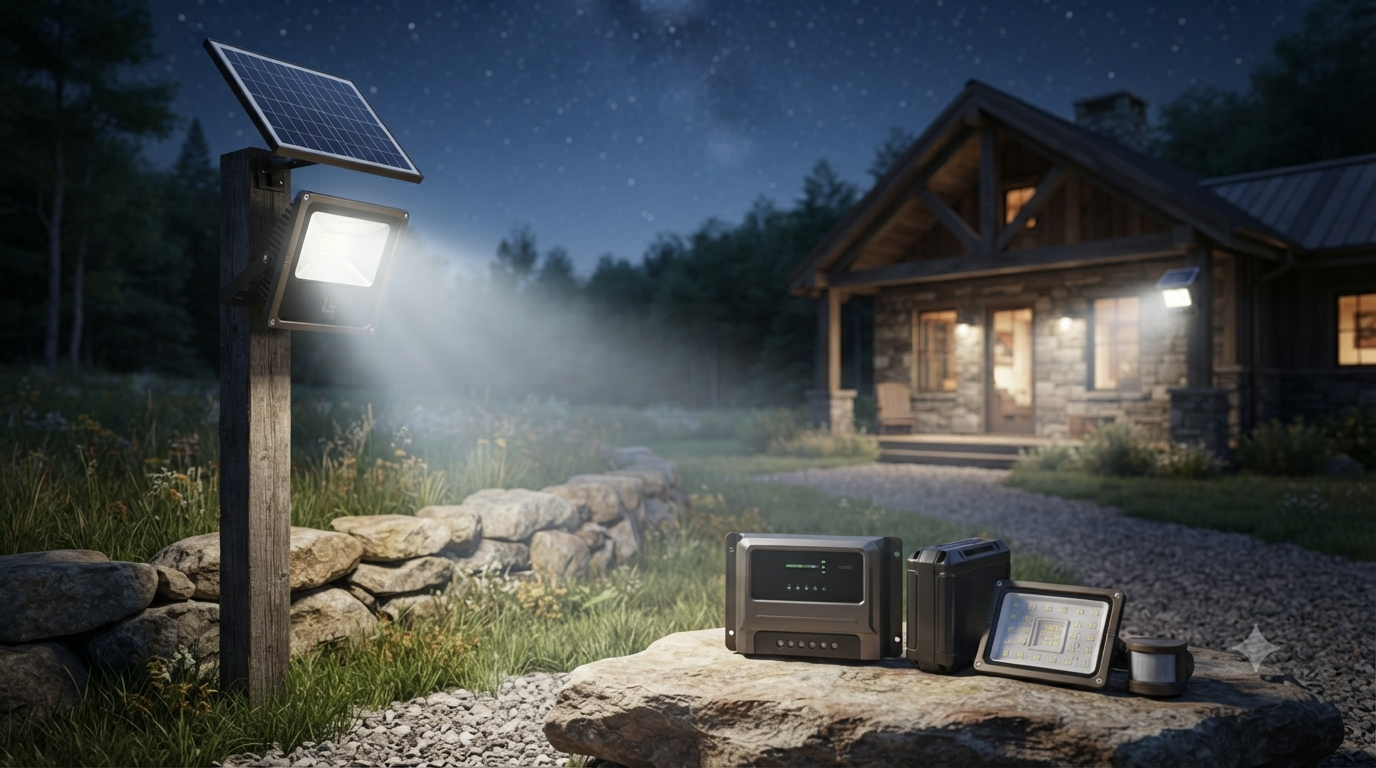
Modern solar powered flood lights can provide outdoor illumination without requiring a permanent electrical connection. They are increasingly used for homes, gardens, driveways, boundary walls, parking areas, farms, warehouses, and remote locations where running electrical cables is expensive or impractical.
At the same time, conventional electric LED floodlights remain the preferred choice for many applications. They deliver predictable performance, operate regardless of sunlight conditions, and can provide high, continuous light output throughout the night.
So, which option is better?
The answer depends on what you're trying to illuminate.
A solar floodlight may be ideal for a remote garden gate or boundary wall where wiring would be difficult. An electric LED floodlight may be a much better solution for a warehouse, commercial parking area, or security installation that requires reliable high-output illumination every night.
This guide compares solar lights floodlights with electric floodlights, examining their brightness, reliability, installation, battery performance, maintenance, energy consumption, weather resistance, security applications, and long-term operating costs.
Solar Flood Lights vs. Electric Flood Lights: Quick Comparison
- Feature
- Solar Powered Flood Lights
- Electric LED Floodlights
- Power Source
- Solar panel + battery
- Mains electricity
- Wiring
- Minimal
- Requires electrical connection
- Installation
- Usually easier
- More complex
- Operating Cost
- Very low after installation
- Ongoing electricity cost
- Nighttime Reliability
- Depends on battery and solar charging
- Generally very consistent
- Weather Dependence
- High
- Low
- Brightness
- Low to moderate, depending on model
- Low to very high
- Continuous Operation
- Limited by battery capacity
- Excellent
- Remote Locations
- Excellent
- May require costly cabling
- Maintenance
- Battery and panel cleaning
- Electrical and fixture maintenance
- Security Applications
- Good for smaller areas
- Excellent for demanding applications
- Initial Installation
- Usually moderate
- Can be higher if wiring is required
- Long-Term Energy Cost
- Very low
- Depends on usage and electricity rates
- The biggest difference is simple
Solar floodlights store energy during the day and use it at night. Electric floodlights draw power when they operate.
That fundamental difference affects nearly every other aspect of performance.
How Do Solar Powered Flood Lights Work?
- A typical solar floodlight system contains four main components
- Solar panel
- Rechargeable battery
- LED light source
- Control electronics
During daylight hours, the solar panel converts sunlight into electrical energy.
That energy charges the battery.
When darkness arrives, a light sensor or control system activates the LED fixture. The stored battery energy is then used to power the light.
Many modern systems also include
- Motion sensors
- Remote controls
- Dimming
- Automatic dusk-to-dawn operation
- Multiple lighting modes
Some systems keep the LED at low brightness throughout the night and increase output when motion is detected.
This can significantly extend battery runtime.
How Do Electric LED Floodlights Work?
An electric LED floodlight connects to a mains electrical supply.
The fixture's LED driver converts and regulates the incoming electrical power before delivering it to the LED system.
Unlike a solar system, the fixture doesn't depend on energy stored during the day.
As long as the electrical supply is available, the floodlight can continue operating.
This makes electric floodlights particularly suitable for
- Commercial security
- Industrial facilities
- Large parking areas
- Warehouses
- Construction sites
- Sports grounds
- High-output area lighting
For applications requiring several hours of consistent, high-intensity illumination every night, mains-powered LED technology generally has a significant advantage.
The Biggest Advantage of Solar Flood Lights: Easy Installation
One of the strongest arguments for solar flood lights outdoor is installation simplicity.
A conventional electric floodlight may require
- Electrical cables
- Conduit
- Junction boxes
- Switches
- Trenching
- Electrical protection
- Professional installation
This can become expensive if the fixture is far from an existing electrical supply.
A solar floodlight eliminates much of this infrastructure.
You typically need to
Mount the solar panel.
Mount the light.
Connect the supplied cables, if the system uses a separate panel.
Configure the controls.
There is no need to run mains cables across a garden or open area.
This is particularly useful for
- Remote gates
- Farm buildings
- Boundary walls
- Garden sheds
- Rural properties
- Temporary sites
- Pro Tip
Don't judge a solar installation solely by how easy it is to install.
The solar panel still needs an appropriate location.
A fixture mounted in a shaded area may work poorly if the panel receives insufficient sunlight.
Electric Floodlights: The Advantage of Reliable Power
Electric floodlights don't depend on daily solar energy collection.
That's their biggest advantage.
If you need the light to operate
- Every night
- For long hours
- At consistent brightness
- During winter
- During cloudy weather
An electric LED floodlight is usually more predictable.
A properly designed mains-powered system can provide the same output every night, regardless of how much sunlight was available during the day.
This makes electric floodlights particularly suitable for security-critical environments.
For example, a large warehouse perimeter shouldn't necessarily depend entirely on a small solar battery system if continuous high-output lighting is required.
Brightness: Which Is More Powerful?
In most cases, electric LED floodlights win when maximum brightness is the priority.
A mains-powered fixture can draw continuous power from the electrical grid, allowing manufacturers to design high-output products ranging from modest residential fixtures to powerful industrial floodlights.
Solar systems are limited by
- Solar panel size
- Battery capacity
- Available sunlight
- System efficiency
- Nighttime operating duration
This doesn't mean solar floodlights are inherently dim.
Modern products can provide excellent illumination for
- Entrances
- Pathways
- Small yards
- Driveways
- Boundary walls
But for large areas requiring high lumen output throughout the night, electric systems generally offer more flexibility.
Solar Flood Lights and Battery Capacity
The battery is the heart of a solar lighting system.
A solar panel may collect energy during the day, but the battery determines how much of that energy is available after sunset.
Important battery specifications include
- Capacity
- Battery chemistry
- Charging efficiency
- Operating temperature
- Cycle life
Common battery technologies include lithium-based batteries and other rechargeable chemistries.
Lithium batteries are widely used in modern solar lighting because they can offer good energy density and compact size.
However, battery performance gradually declines over time.
After several years of charging and discharging cycles, the battery may no longer hold the same amount of energy it did when new.
This means the light may
- Operate for fewer hours
- Become dimmer
- Switch off earlier
When evaluating solar powered flood lights, always consider the availability and cost of battery replacement.
Weather Conditions Matter More for Solar Floodlights
Solar lighting performance depends directly on environmental conditions.
Cloudy or rainy weather can reduce the amount of energy captured by the solar panel.
Several consecutive days of poor sunlight can create a problem.
The battery may not receive enough energy to maintain full operation throughout the night.
This is particularly relevant in regions with
- Long rainy seasons
- Frequent cloud cover
- Heavy winter fog
- Shaded installation locations
Electric floodlights don't face this limitation.
They can continue operating at full output regardless of sunlight conditions.
Pro Tip
- If you live in an area with seasonal cloud cover, choose a solar system with
- Larger solar panel capacity
- Higher battery capacity
- Efficient LED output
- Intelligent dimming
- Motion activation
Don't select a solar fixture based only on its maximum brightness.
Look at how it performs after several hours of operation.
Motion Sensors Make Solar Floodlights More Practical
Motion detection can dramatically improve solar lighting performance.
Instead of running at full brightness for eight or ten hours, the fixture can remain off or operate at low brightness until movement is detected.
For example
- Normal mode: 20% brightness
- Motion detected: 100% brightness for 60 seconds
This reduces battery consumption and allows the system to operate longer.
Motion-activated solar floodlights are particularly useful for
- Driveways
- Side entrances
- Garages
- Backyards
- Boundary walls
The same principle can be applied to electric floodlights, but the energy-saving advantage is often more significant for solar systems because battery capacity is limited.
Solar vs. Electric Floodlights for Security
Security lighting requires careful consideration.
For basic residential security, solar floodlights can work extremely well.
A motion-activated solar fixture can suddenly illuminate a dark area when someone approaches.
This can
- Improve visibility
- Alert occupants
- Support CCTV cameras
- Discourage unwanted activity
However, large-scale security systems often benefit from mains-powered lighting.
Why?
- Because security lighting may need to operate
- For long periods
- At high brightness
- Every night
- Regardless of weather
For high-security facilities, electric floodlights combined with backup power may offer greater reliability.
The best approach depends on the risk level and lighting requirements.
Solar Floodlights for CCTV Cameras
Solar lighting can be useful for security cameras, but placement is critical.
A motion-activated solar floodlight can improve visibility when movement occurs.
However, the fixture should not point directly into the camera lens.
Otherwise, you may experience
- Glare
- Overexposure
- Loss of image detail
Position the light so it illuminates the subject area without shining directly into the camera.
For critical surveillance systems, dedicated lighting design may be preferable to relying entirely on motion-triggered solar fixtures.
Energy Efficiency: Which Costs Less to Run?
Solar floodlights use stored solar energy, so their direct operating electricity cost is effectively zero after installation.
Electric LED floodlights consume electricity whenever they operate.
However, LEDs are already highly energy efficient compared with older halogen technology.
The long-term operating cost depends on
- Fixture wattage
- Daily operating hours
- Electricity tariff
- Number of fixtures
- Years of operation
- For example, a 50W electric floodlight operating for 10 hours every night consumes
- 05 kW × 10 hours = 0.5 kWh per day
- Over a year
- 5 × 365 = 182.5 kWh
The actual monetary cost depends on your local electricity rate.
A solar floodlight doesn't consume electricity from the grid, but it does have other lifecycle costs, particularly battery replacement.
So the comparison isn't simply
- Solar = Free
- Electric = Expensive
- A more accurate comparison is
- Solar = Higher dependence on sunlight, low grid energy cost, battery replacement
- Electric = Reliable power, ongoing electricity cost, potentially higher installation cost
- Initial Cost vs. Long-Term Cost
The total cost of ownership is more important than the purchase price.
Solar Floodlights
- Initial costs may include
- Fixture
- Solar panel
- Battery
- Mounting hardware
- Long-term costs may include
- Battery replacement
- Panel cleaning
- Occasional sensor replacement
- Electric Floodlights
- Initial costs may include
- Fixture
- Wiring
- Conduit
- Electrical protection
- Installation labor
- Long-term costs may include
- Electricity
- Driver replacement
- Fixture maintenance
If the installation location is far from an electrical supply, solar can become financially attractive because it avoids expensive cable installation.
If electrical infrastructure is already available, mains-powered LED lighting may offer better performance for the money.
Solar Panel Placement Is Critical
A solar floodlight can only perform as well as its solar panel allows.
Ideally, the panel should receive strong, unobstructed sunlight for much of the day.
Avoid locations shaded by
- Trees
- Buildings
- Walls
- Roof structures
- Other panels
Even partial shading can affect energy collection.
For installations in the Northern Hemisphere, panel orientation should be selected based on the local site and seasonal sun path rather than blindly copying a fixed mounting direction.
The angle also matters.
If you're installing a separate solar panel, position it according to the manufacturer's recommendations and local solar conditions.
Separate Solar Panels vs. Integrated Solar Floodlights
Solar floodlights generally fall into two categories.
Integrated Solar Floodlights
The panel and LED fixture are built into the same housing.
Advantages
- Simple installation
- Compact design
- Minimal wiring
- Disadvantages
- Panel orientation is limited
- The light may need to face a different direction from the sun
- Shading can be a problem
- Separate-Panel Solar Floodlights
The LED fixture and solar panel are connected by a cable.
Advantages
- Panel can be positioned for better sunlight
- Light can face the required direction
- Better flexibility for shaded locations
- Disadvantages
- More installation work
- Cable routing required
For many permanent installations, separate-panel designs provide greater flexibility.
IP Rating and Outdoor Durability
Both solar and electric floodlights installed outdoors need appropriate weather protection.
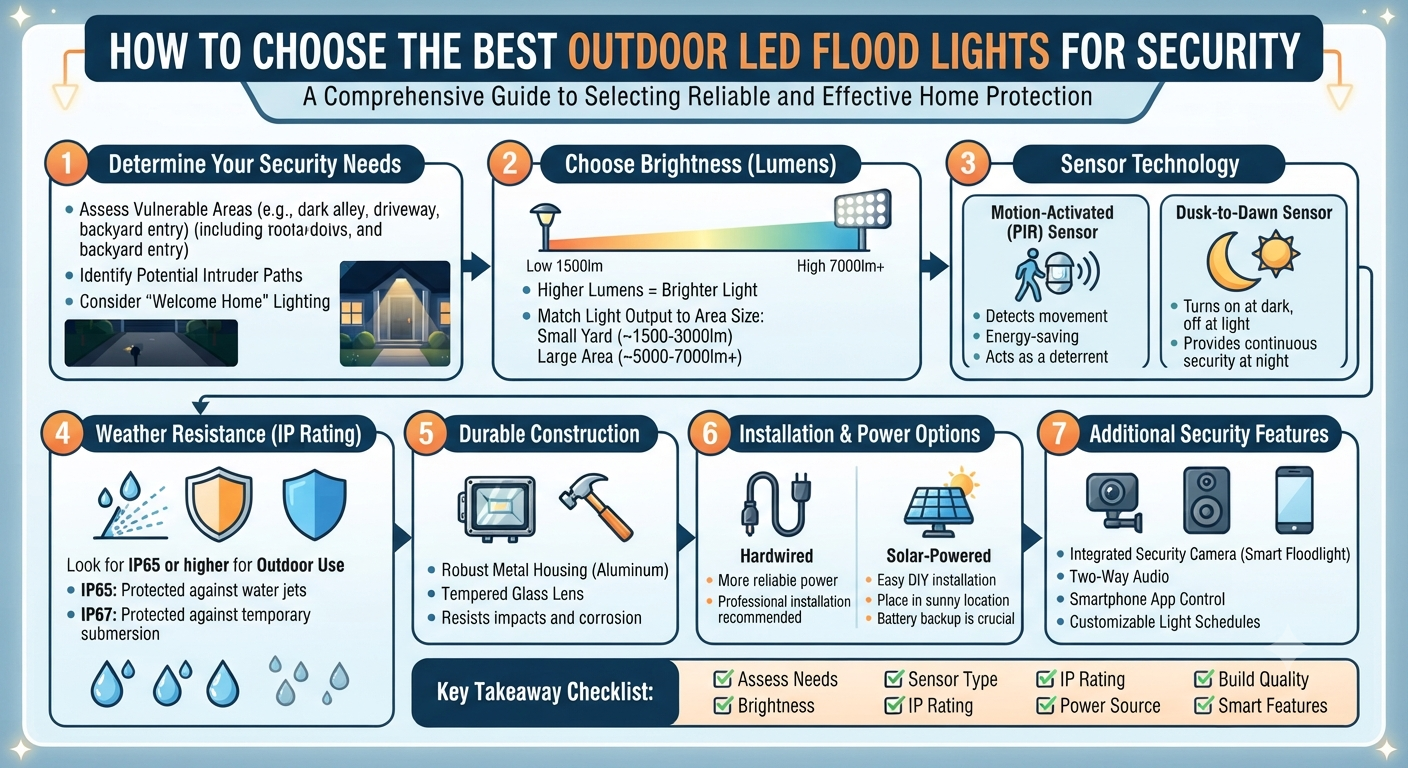
Look for an appropriate IP rating based on the installation environment.
Common ratings include
- IP54
- IP65
- IP66
- IP67
For many exposed outdoor applications, IP65 or IP66 is a practical starting point.
However, the correct rating depends on the fixture location and exposure.
A floodlight mounted beneath a protected roof may experience less direct rain than one installed on an exposed boundary wall.
Also consider
- UV exposure
- Temperature extremes
- Corrosion
- Dust
- Humidity
A quality outdoor fixture should be designed for the environment in which it will operate.
Maintenance Requirements
- Solar floodlights have one maintenance task that electric floodlights generally don't
Solar panel cleaning.
Dust, dirt, bird droppings, and other debris can reduce solar energy collection.
Depending on the environment, periodic cleaning may be necessary.
Solar systems also have batteries that eventually require replacement.
Electric LED floodlights typically have fewer consumable components.
However, they still require
- Fixture cleaning
- Electrical inspection
- Driver maintenance
- Occasional replacement
In dusty or industrial environments, both systems may require regular cleaning.
Lifespan: LEDs vs. Batteries
The LED itself may have a long operating life.
But the overall lifespan of a solar floodlight is determined by its weakest major component.
The LED may continue working for years while the battery gradually loses capacity.
This is why you should distinguish between
- LED lifespan
- and
- complete system lifespan
- When buying solar lights floodlights, ask about
- Expected battery cycle life
- Battery replacement options
- LED operating life
- Driver reliability
- Warranty period
A replaceable battery can make the fixture much more sustainable over the long term.
Solar Flood Lights vs. Electric Floodlights: Pros and Cons
- Solar Flood Lights — Pros
- No grid electricity consumption
- Easy installation
- Minimal wiring
- Excellent for remote locations
- Low operating costs
- Useful for motion-activated security
- Environmentally friendly during operation
- Can work where grid power isn't available
- Solar Flood Lights — Cons
- Dependent on sunlight
- Limited battery capacity
- Performance can decline during prolonged cloudy weather
- Battery eventually needs replacement
- Usually lower continuous output
- Solar panel requires proper positioning
- Panel may require cleaning
- Electric Floodlights — Pros
- Consistent power
- High lumen output available
- Reliable operation in all weather
- Suitable for long operating hours
- Excellent for large areas
- Wide range of fixture options
- Easier to maintain continuous brightness
- Electric Floodlights — Cons
- Requires electrical connection
- Installation can be expensive
- Ongoing electricity consumption
- Wiring may be difficult in remote areas
- Professional installation may be required
- Which Is Better for Your Application?
The best choice depends on the site.
Choose Solar Floodlights If
There is no convenient electrical supply.
Running cables would be expensive.
The location receives adequate sunlight.
You need moderate illumination.
Motion activation is acceptable.
You want to minimize grid electricity use.
Choose Electric Floodlights If
Reliable illumination is critical.
The light must operate for many hours every night.
You need high lumen output.
The area is large.
The site already has electrical infrastructure.
Weather-independent performance is essential.
Consider a Hybrid Approach If
You need the benefits of both systems.
For example
- Electric floodlights for primary security lighting
- Solar floodlights for remote boundary areas
This can reduce wiring costs while maintaining reliable illumination in critical locations.
Common Solar Floodlight Buying Mistakes
- Looking Only at Wattage
A higher wattage doesn't guarantee better real-world illumination.
Check actual lumen output.
Ignoring Battery Capacity
A bright light with a small battery may not last through the night.
Buying Without Checking Solar Panel Size
The panel must be capable of replenishing the battery.
Installing the Panel in Shade
Even a high-quality system can perform poorly without adequate sunlight.
Ignoring Weather Conditions
Consider seasonal cloud cover and local climate.
Choosing Non-Replaceable Batteries
A replaceable battery can extend the useful life of the system.
Expecting Solar to Replace High-Output Industrial Lighting
Solar is excellent for many applications, but high-output continuous lighting may require a larger and more expensive system.
Common Electric Floodlight Buying Mistakes
- Choosing by Wattage Alone
Compare lumens, efficacy, and beam angle.
Ignoring IP Rating
Outdoor fixtures need appropriate environmental protection.
Buying Low-Quality Drivers
Driver failure is a common cause of LED fixture problems.
Forgetting Surge Protection
Consider surge protection for exposed installations.
Poor Beam Selection
The wrong optics can produce dark zones or excessive glare.
Ignoring Maintenance Access
Make sure fixtures and drivers can be serviced safely.
A Practical Decision-Making Checklist
- Before choosing between solar and electric floodlights, ask
- Is Grid Electricity Available?
If not, solar may be the obvious choice.
How Much Light Do You Need?
Small security areas may work well with solar.
Large areas may favor electric systems.
How Many Hours Must the Light Operate?
Short motion-triggered operation favors solar.
Long continuous operation favors electric.
How Much Sunlight Does the Location Receive?
Solar performance depends heavily on this factor.
Is Security Critical?
For critical security, prioritize reliability and consider backup power.
What Is the Installation Cost?
Compare the cost of electrical wiring against the cost of a complete solar system.
What Is the Long-Term Maintenance Plan?
Consider batteries, cleaning, drivers, and replacement parts.
Frequently Asked Questions
- Are solar powered flood lights as bright as electric floodlights?
Some modern solar floodlights can provide strong illumination for residential security and smaller outdoor areas. However, electric LED floodlights generally offer greater flexibility for high-output applications and can maintain consistent brightness for extended periods. Solar performance depends heavily on battery capacity, solar panel size, and available sunlight.
Do solar flood lights work on cloudy days?
Yes, solar floodlights can still operate after cloudy weather because the solar panel can collect some energy under overcast conditions. However, charging efficiency is reduced, and several consecutive cloudy days may reduce nighttime operating time. Choosing an appropriately sized panel and battery can help improve reliability.
Are solar flood lights good for security?
Yes. Solar flood lights outdoor can be effective for entrances, driveways, gardens, boundary walls, and remote areas. Motion-activated models are particularly useful because they conserve battery power while providing bright illumination when movement is detected. For high-security or large commercial sites, mains-powered lighting may provide more consistent performance.
Which is cheaper: solar or electric floodlights?
Solar floodlights generally have lower ongoing energy costs because they don't consume grid electricity. However, the initial purchase price and eventual battery replacement must be considered. Electric floodlights may be more economical when electrical infrastructure is already available, particularly when high brightness and long operating hours are required.
Final Takeaway: Match the Technology to the Location
There is no universal winner in the solar flood lights vs. electric floodlights debate.
Solar powered flood lights are an excellent choice when installation simplicity, energy independence, and remote operation are priorities. They can provide effective security illumination without the cost and complexity of running electrical cables.
Electric LED floodlights remain the stronger choice when you need high brightness, consistent performance, long operating hours, and dependable operation regardless of weather conditions.
For homeowners, a motion-activated solar floodlight may be all that's needed to illuminate a driveway or backyard. For warehouses, industrial yards, large parking areas, and critical security installations, mains-powered LED floodlights are often more practical.
The smartest solution may also be a combination of both.
Use electric floodlights where reliable high-output illumination is essential, and deploy solar lights floodlights in remote or difficult-to-wire locations.
Before buying, compare more than the price tag. Look at lumens, battery capacity, solar panel size, operating time, IP rating, beam angle, LED efficiency, driver quality, and long-term maintenance.
The best outdoor lighting system isn't simply the one that produces the most light.
It's the one that delivers the right amount of light, in the right location, with the lowest practical total cost of ownership.