bolt Quick Answer (As of 2026)
Lighting can completely change the way a room feels.
Lighting can completely change the way a room feels.
The same living room can appear bright and energetic in the afternoon, warm and relaxing in the evening, and softly illuminated during movie night—all without changing the furniture, wall color, or décor. The difference is often light intensity.
That's where dimmable LED light bulbs come in.
Unlike standard on/off lighting, dimmable LEDs allow you to adjust brightness according to the activity, time of day, and mood. You can turn the lights up when you're cooking, reduce the intensity while watching television, or create a softer atmosphere when entertaining guests.
But there's a technical detail that many homeowners overlook: not every LED bulb is dimmable, and not every dimmer switch is compatible with every LED bulb.
Poor compatibility can result in flickering, buzzing, limited dimming range, or even premature failure.
This guide explains how dimmable LED technology works, how to choose the right bulb and dimmer, and how to create effective lighting scenes throughout your home—from the kitchen and bedroom to the bathroom, living room, and outdoor spaces.
What Are Dimmable LED Light Bulbs?
Dimmable LED light bulbs are LED lamps designed to operate at different brightness levels rather than simply switching between fully on and fully off.
The brightness can typically be adjusted using
- A wall-mounted dimmer
- A rotary dimmer
- A slider dimmer
- A smart lighting control
- A remote control
- A compatible home automation system
The exact dimming method depends on the bulb and its driver.
Unlike incandescent bulbs, which naturally dim by reducing the electrical power delivered to the filament, LEDs require electronic circuitry to control current.
That means the LED driver plays a crucial role in dimming performance.
A high-quality dimmable LED should provide smooth, stable brightness adjustment without excessive flicker or unexpected shutdown.
Dimmable LED vs. Non-Dimmable LED Bulbs
- Feature
- Dimmable LED Bulb
- Non-Dimmable LED Bulb
- Brightness Control
- Yes, with compatible equipment
- Usually no
- Standard Wall Switch
- Yes
- Yes
- Dimmer Required
- For manual dimming
- No
- Smart Control
- Often available
- Usually unavailable
- Energy Use at Reduced Brightness
- Can be lower
- Fixed
- Installation Complexity
- Moderate
- Simple
- Best For
- Flexible lighting environments
- Basic on/off lighting
- Upfront Cost
- Usually higher
- Usually lower
If you don't need brightness control, a non-dimmable LED may be perfectly adequate.
But in rooms with multiple uses, dimmable lighting offers much greater flexibility.
Why Dimming Matters
Imagine a kitchen.
At 7:00 AM, you want bright light for preparing breakfast.
At 8:00 PM, the same kitchen may benefit from softer illumination while the family is having dinner.
The fixture hasn't changed.
The required lighting level has.
This is the fundamental advantage of dimming.
You can adjust the lighting to match the task.
Dimming can help create
- Better visual comfort
- Reduced glare
- A more relaxing atmosphere
- Greater flexibility
- Lower energy consumption
- More attractive interior spaces
The best lighting design isn't necessarily the brightest.
It's the lighting that provides the right amount of light at the right time.
How Dimmable LED Bulbs Work
The LED itself doesn't behave like a traditional incandescent filament.
Instead, the bulb contains an electronic driver that regulates electrical current.
When you adjust the dimmer, the driver responds by reducing or modifying the power delivered to the LED.
Depending on the system, dimming may use different control methods.
Common approaches include
- Phase-cut dimming
- PWM control
- 0–10V dimming
- DALI
- Digital smart controls
For residential replacement bulbs, phase-cut dimming is one of the most common approaches.
However, compatibility is critical.
A dimmer designed for incandescent lamps may not provide satisfactory performance with LED bulbs.
This is why choosing a compatible dimmer is just as important as choosing a good LED bulb.
The Biggest Mistake: Assuming Every LED Bulb Is Dimmable
Not every LED bulb supports dimming.
Some are specifically designed for simple on/off operation.
Others are engineered for use with compatible dimmers.
Before purchasing, look for wording such as
- "Dimmable"
on the packaging or technical datasheet.
If the manufacturer doesn't clearly state that the bulb supports dimming, don't assume it does.
Using a non-dimmable LED with a dimmer can cause
- Flickering
- Buzzing
- Poor brightness control
- Intermittent operation
- Driver damage
- For a professional installation, always verify compatibility between the
- Bulb + Driver + Dimmer + Electrical System
The complete system determines performance.
Why Do Dimmable LED Bulbs Flicker?
Flickering is one of the most common complaints associated with poorly matched LED lighting systems.
The problem can have several causes.
Incompatible Dimmer
The dimmer may not be designed for LED loads.
Poor-Quality LED Driver
Low-cost drivers may not regulate current smoothly at reduced brightness.
Minimum Load Requirement
Some older dimmers require a minimum electrical load to operate correctly.
An LED bulb consumes significantly less power than an incandescent bulb, so the dimmer may not behave as expected.
Multiple Bulb Compatibility
Mixing different bulb brands or models on the same dimming circuit can sometimes produce inconsistent results.
Wiring Problems
Loose connections or electrical faults can also cause flicker.
Pro Tip
If you experience flickering after installing dimmable LED bulbs, don't immediately assume the bulbs are defective.
Check the dimmer's LED compatibility and minimum/maximum load specifications first.
Choosing the Right LED Dimmer
If you're installing dimmable LED light bulbs, the dimmer is an important part of the system.
Look for a dimmer specifically rated for LED loads.
Consider
- Minimum load
- Maximum load
- Compatible dimming method
- Number of bulbs
- Manufacturer compatibility list
- Neutral-wire requirements
- Smart-home compatibility
A good LED-compatible dimmer should provide smooth control across the intended brightness range.
Some systems may dim from 100% down to 10% smoothly.
Others may struggle at very low levels.
The actual performance depends on the combination of bulb and dimmer.
Minimum and Maximum Load Explained
This is particularly important when replacing high-wattage incandescent bulbs with low-wattage LEDs.
Suppose an old dimmer was designed for
- 40W–600W
You replace five 60W incandescent bulbs.
The original load is
- 300W
Now you replace them with five 9W LED bulbs.
The new load is
- 45W
The total electrical load has dropped dramatically.
An older dimmer may not operate correctly at the new load level.
A modern LED-compatible dimmer is generally a better choice.
This is one reason LED retrofits sometimes require replacing the dimmer as well as the bulbs.
Dimmable LED Bulbs and Energy Savings
Dimming can reduce energy consumption.
However, the exact savings depend on the dimming technology and system design.
If a bulb is operated below full brightness, it generally consumes less power than when operating at maximum output.
But the relationship between brightness and power consumption isn't always perfectly linear.
For example, reducing brightness by 50% doesn't necessarily mean electricity consumption drops by exactly 50%.
The driver still consumes some energy, and different control systems behave differently.
Still, dimming can contribute to lower energy consumption, particularly when lights are frequently operated below full output.
Dimming and LED Lifespan
Operating an LED at lower power can reduce thermal stress in some applications.
Lower LED operating temperatures may contribute to longer component life.
However, the actual lifespan depends on the entire product, including
- LED chip quality
- Driver reliability
- Heat dissipation
- Ambient temperature
- Electrical conditions
A high-quality dimmable LED with a well-designed driver and good thermal management is more likely to provide reliable long-term performance.
Dimming alone shouldn't be treated as a guarantee of longer lifespan.
Creating the Perfect Lighting for Every Room
Different rooms have different lighting requirements.
A single brightness level throughout the house rarely provides the best experience.
Here's how to approach dimmable LED lighting room by room.
Living Room: Flexible and Relaxing
The living room is usually one of the best places for dimmable LEDs.
It may serve as
- A family gathering area
- A reading space
- A television room
- An entertainment area
Bright light may be useful during daytime activities.
Lower brightness is often better for
- Watching television
- Relaxing
- Entertaining guests
- Recommended Approach
- Combine
- Dimmable ceiling lights
- Floor lamps
- Table lamps
- Accent lighting
Avoid relying on a single extremely bright ceiling fixture.
Layered lighting gives you much more control.
Pro Tip
Use dimmable ambient lighting as your foundation, then add brighter task lighting where necessary.
This creates a more comfortable environment than simply installing one high-wattage fixture.
Bedroom: Softer Light for a Calmer Environment
Bedrooms typically benefit from warmer, lower-intensity lighting.
Consider
- 2700K–3000K
for a comfortable warm-white appearance.
Dimming is particularly useful in the evening.
You might use
- 100% brightness for cleaning
- 50% for getting dressed
- 20–30% for relaxing
Bedside lamps can also use dimmable LEDs to provide localized light without illuminating the entire room.
Kitchen: Bright for Tasks, Soft for Evenings
Kitchen lighting needs to be versatile.
During food preparation, you need adequate illumination.
At other times, excessive brightness can feel harsh.
Consider separate circuits for
- General ceiling lighting
- Under-cabinet lighting
- Pendant lights
- Dining-area lighting
Dimming the ceiling fixtures while keeping under-cabinet lights at a comfortable level can create a more sophisticated atmosphere.
For kitchens, pay attention to CRI.
A CRI of 80+ is generally suitable for many residential applications, while higher CRI can be beneficial where accurate food and material colors matter.
Dining Room: Set the Mood With Dimming
Dining areas are ideal for adjustable lighting.
Bright lighting may work for
- Homework
- Cleaning
- General activity
- Lower, warmer lighting can be better for
- Dinner
- Entertaining
- Special occasions
Pendant lights or chandeliers equipped with compatible dimmable LEDs can become the visual centerpiece of the room.
Just make sure the lamp and dimmer are both compatible.
Bathroom: Balance Brightness and Comfort
Bathrooms need adequate illumination for practical tasks.
Bright lighting is particularly important around
- Mirrors
- Vanities
- Grooming areas
However, very bright overhead lighting may be uncomfortable at night.
Dimming allows you to create separate lighting levels.
Practical Setup
- Use
- Bright vanity lighting for grooming
- Dimmable ambient ceiling lighting
- Lower brightness for nighttime visits
Always follow electrical safety requirements for wet and damp locations.
The fixture must be rated appropriately for the installation zone.
Home Office: Control Glare
A home office needs enough light for comfortable work without creating excessive glare.
Dimmable LEDs allow you to adjust lighting according to
- Time of day
- Natural daylight
- Screen brightness
- Task requirements
Choose high-quality LEDs with good color rendering.
Avoid positioning bright fixtures where they reflect directly into computer screens.
A combination of indirect and task lighting can often provide better visual comfort than one extremely bright ceiling lamp.
Hallways and Staircases: Use Less Light, Not More
Hallways don't usually require the same illumination level as kitchens or workspaces.
Dimmable LEDs allow you to reduce brightness while maintaining safe visibility.
This is particularly useful at night.
You can combine dimming with
- Motion sensors
- Occupancy sensors
- Smart controls
For example, hallway lights can remain at a very low level during nighttime hours and brighten automatically when movement is detected.
Outdoor Areas: Dimming With Purpose
- Outdoor dimmable LED lighting can be useful for
- Patios
- Porches
- Covered terraces
- Architectural lighting
- However, outdoor installations require careful consideration of
- IP rating
- Weather exposure
- Temperature
- Driver location
- Electrical safety
For security floodlights, maximum brightness isn't always necessary throughout the night.
A controlled lighting system can reduce light pollution and energy use while maintaining adequate visibility.
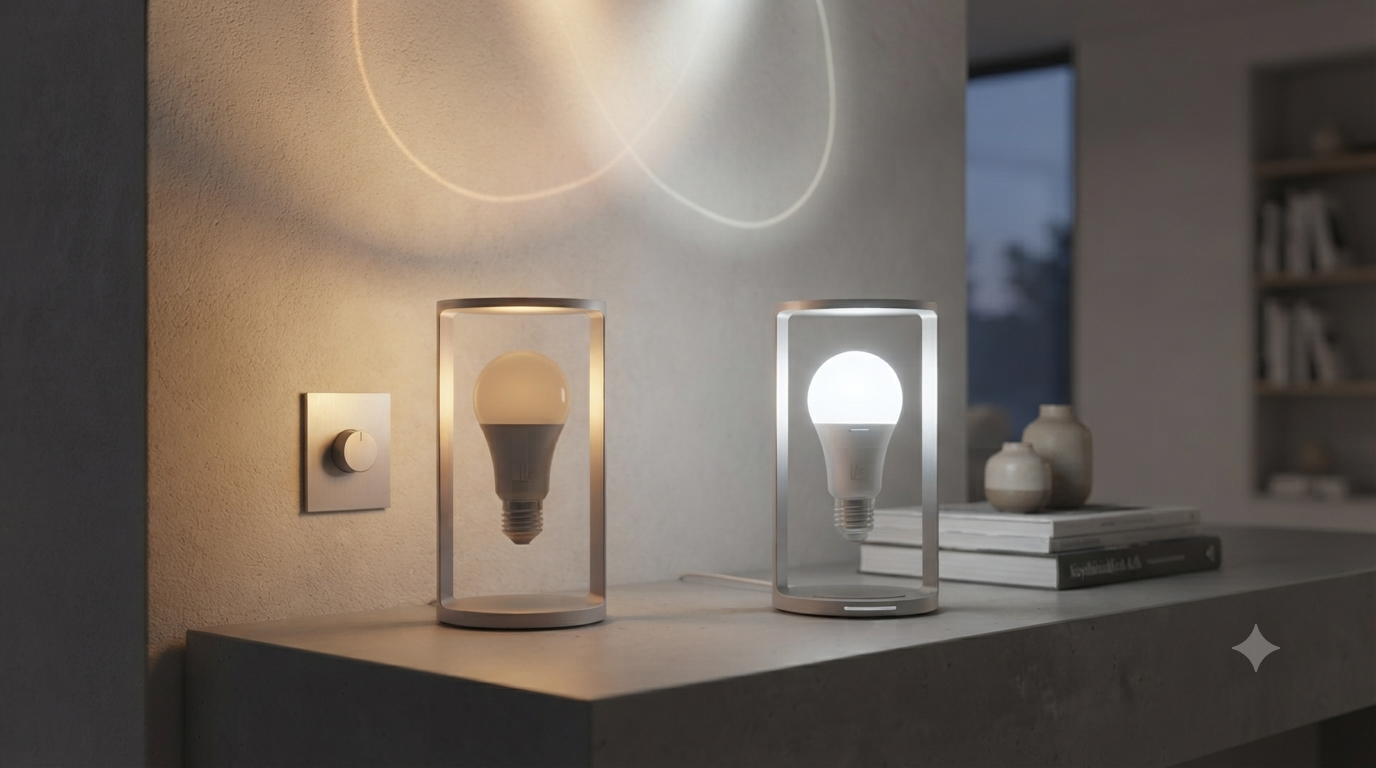
Dimmable LED Color Temperature
Brightness isn't the only variable you can control.
Some advanced lighting systems allow you to adjust both
- Brightness
- and
- Color temperature
This is often called tunable white lighting.
For example
- Daytime
- 4000K–5000K
A brighter, cooler appearance.
Evening
- 2700K–3000K
A warmer, more relaxing appearance.
This gives you two dimensions of control
- How bright is the light?
- How warm or cool does it look?
These systems can provide a more dynamic lighting environment than simple dimming alone.
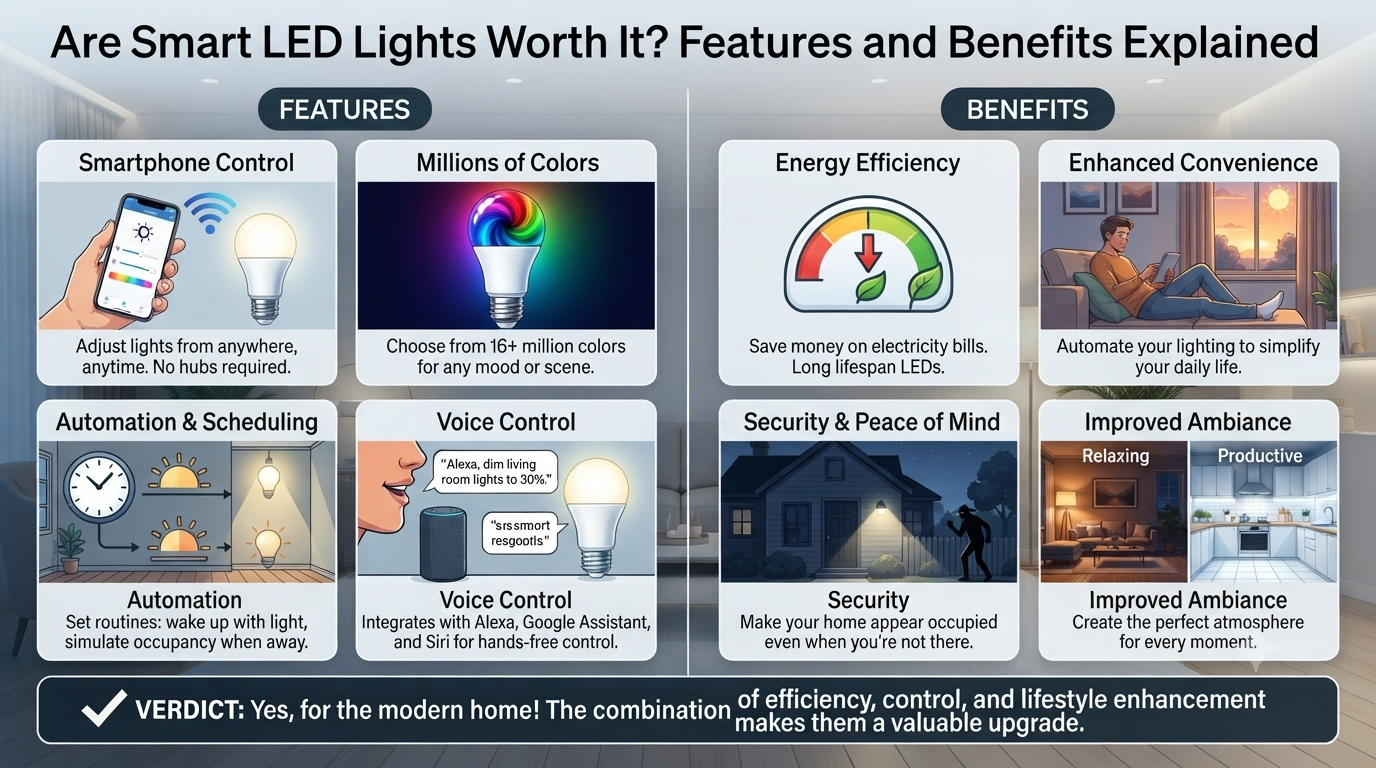
Dimmable LED Bulbs vs. Smart LED Bulbs
Smart bulbs often include dimming as a built-in feature.
However, the two categories are not identical.
A traditional dimmable LED bulb generally requires a compatible wall dimmer.
A smart LED bulb may be controlled through
- Smartphone apps
- Voice assistants
- Wireless switches
- Smart-home automation
- Smart bulbs can also offer
- Scheduling
- Scenes
- Color temperature adjustment
- RGB colors
But they introduce additional complexity.
If you simply want to adjust brightness with a wall control, a standard dimmable LED may be the better choice.
If you want automation and remote control, smart lighting may be more suitable.
Can You Dim Any LED Bulb?
No.
Always check the manufacturer's specifications.
You also need to verify
- Bulb compatibility
- Dimmer compatibility
- Voltage
- Fixture compatibility
- Minimum load
- Maximum load
For integrated LED fixtures, the driver itself must support dimming.
Replacing the wall dimmer alone won't make a non-dimmable integrated LED fixture dimmable.
What Does "Dimmable Range" Mean?
A bulb may be advertised as dimmable, but that doesn't necessarily mean it can operate smoothly from 100% to 1%.
Many products have a practical minimum brightness.
For example, a bulb may dim smoothly to approximately 10–20% but become unstable below that level.
If you want very low nighttime illumination, check the manufacturer's dimming performance.
For hospitality, restaurants, bedrooms, and entertainment spaces, the minimum dimming level can be particularly important.
Why Do Dimmable LEDs Buzz?
- A slight buzzing sound may come from
- The bulb's driver
- The dimmer
- Electrical interaction between the two
Some inexpensive LED products may produce noticeable noise when dimmed.
If buzzing occurs, try
Confirming the bulb is dimmable.
Checking dimmer compatibility.
Testing another LED-compatible dimmer.
Testing a different bulb model.
A quality lighting system should operate quietly under normal conditions.
How Many Dimmable LED Bulbs Can You Put on One Dimmer?
There isn't one universal number.
The answer depends on
- Dimmer rating
- Bulb wattage
- LED driver characteristics
- Minimum load
- Maximum load
- Manufacturer recommendations
Never assume that a dimmer rated for 600W of incandescent lighting can automatically handle hundreds of LED bulbs.
LED loads behave differently from traditional resistive loads.
Always follow the dimmer manufacturer's specified LED capacity.
Practical Buying Checklist for Dimmable LED Light Bulbs
- Before purchasing, check these specifications
- ✔ Dimmable Rating
Confirm the bulb is designed for dimming.
✔ Lumens
Choose sufficient brightness for the room.
✔ Wattage
Compare energy consumption.
✔ Color Temperature
Select warm, neutral, or cool white according to the application.
✔ CRI
Choose an appropriate color-rendering level.
✔ Dimming Compatibility
Verify the recommended dimmer type.
✔ Minimum Brightness
Check how low the bulb can dim smoothly.
✔ Flicker Performance
Look for products designed for low-flicker operation.
✔ Driver Quality
The driver is critical to reliable dimming.
✔ Warranty
A strong warranty can indicate confidence in product quality.
Common Dimming Mistakes to Avoid
- Using a Non-Dimmable LED With a Dimmer
This can lead to flickering or failure.
Keeping an Old Incandescent Dimmer
The dimmer may not be compatible with low-wattage LED loads.
Mixing Different LED Brands
Different drivers may respond differently to the same dimming signal.
Ignoring Minimum Brightness
Some bulbs won't dim smoothly to very low levels.
Choosing Based Only on Wattage
Always consider lumens and application.
Installing Indoor Bulbs Outdoors
Check IP and environmental ratings.
Using Dimming to Compensate for Poor Lighting Design
Dimming can't fix an incorrectly designed lighting layout.
Frequently Asked Questions
- Are all LED bulbs dimmable?
No. Some LED bulbs are designed only for on/off operation. If you need adjustable brightness, choose a product specifically labeled as dimmable and verify that it is compatible with your dimmer or control system.
Why do my dimmable LED light bulbs flicker?
Flickering is commonly caused by an incompatible dimmer, poor-quality LED driver, incorrect electrical load, or an installation issue. Check that both the bulb and dimmer are designed to work together. If the problem continues, consult a qualified electrician.
Can I use a regular dimmer switch with dimmable LED bulbs?
Sometimes, but compatibility is not guaranteed. Older dimmers designed for incandescent bulbs may have minimum-load requirements that don't work well with low-wattage LEDs. An LED-compatible dimmer is usually the better choice.
Do dimmable LED bulbs save electricity?
They can. Operating an LED at a reduced brightness level generally consumes less electricity than operating it at full output, although the savings aren't always directly proportional to the brightness reduction. The main advantage of dimming is flexibility, with energy savings as an additional benefit.
Final Takeaway: Get More From Your Lighting With Dimming
Dimmable LED light bulbs offer one of the easiest ways to make a lighting system more flexible.
Instead of accepting one fixed brightness level, you can adapt the illumination to the room, activity, and time of day. Bright light can support detailed tasks in the kitchen or home office. Lower levels can make bedrooms, living rooms, and dining spaces feel more comfortable and inviting.
But successful dimming depends on compatibility.
Choose a dimmable LED bulb, pair it with an LED-compatible dimmer, and pay attention to the bulb's driver quality, dimming range, flicker performance, and electrical specifications.
For the best results, think beyond individual bulbs and design the room in layers
Ambient lighting for overall illumination. Task lighting for practical work. Accent lighting for atmosphere.
Then use dimming to bring those layers together.
The result is a lighting system that doesn't simply illuminate a room—it adapts to how you actually live in it.