bolt Quick Answer (As of 2026)
Ceiling lighting is one of the first things people notice when they enter a room, yet it is often treated as an afterthought. The right fixture can make a small room feel larger, highlight architectural details, improve visibility, and establish t...
Ceiling lighting is one of the first things people notice when they enter a room, yet it is often treated as an afterthought. The right fixture can make a small room feel larger, highlight architectural details, improve visibility, and establish the entire mood of an interior. The wrong one can create harsh glare, uneven illumination, or a fixture that looks completely out of place.
Today, homeowners have more choices than ever. A simple ceiling bulb can provide efficient general illumination with minimal installation and maintenance. At the other end of the spectrum, a modern LED chandelier can become the visual centerpiece of a dining room, entrance hall, hotel lobby, or luxury living space.
The choice isn't simply between "basic" and "fancy." It comes down to how the room is used, how much light is required, the ceiling height, interior design, maintenance expectations, and whether the fixture's primary purpose is illumination, decoration, or both.
This guide compares LED ceiling light bulbs, ceiling fixtures, and LED chandeliers. You'll learn how to choose the right wattage and lumens, understand color temperature, evaluate energy efficiency, select the correct fixture for different rooms, and avoid common ceiling-lighting mistakes.
LED Ceiling Bulbs vs. LED Chandeliers: The Quick Comparison
Before exploring the details, here's a simple overview.
Feature
- LED Ceiling Bulb
- LED Ceiling Fixture
- LED Chandelier
- Primary Purpose
- General illumination
- General illumination
- Illumination + decoration
- Installation
- Simple
- Moderate
- More complex
- Visual Impact
- Minimal
- Modern and discreet
- High
- Energy Efficiency
- High
- High
- High
- Best For
- Bedrooms, utility rooms
- Kitchens, offices, living rooms
- Dining rooms, foyers, luxury interiors
- Maintenance
- Easy
- Usually low
- Can be more involved
- Ceiling Height
- Any
- Any
- Best with adequate height
- Light Distribution
- Depends on bulb/fixture
- Usually broad
- Depends on design
- Cost
- Low to moderate
- Moderate
- Moderate to premium
For a practical home, LED ceiling light bulbs may be all you need.
For a room where the lighting fixture is part of the interior design, a led chandelier may be the better choice.
What Are LED Ceiling Light Bulbs?
The term LED ceiling light bulbs generally refers to LED lamps installed in ceiling-mounted fixtures.
They can be used in
- Flush-mount fixtures
- Semi-flush fixtures
- Pendant lights
- Track lighting
- Decorative fixtures
- Traditional lamp holders
Compared with incandescent and halogen bulbs, LED technology offers substantially better energy efficiency and longer service life.
An LED bulb also produces less heat than an incandescent lamp for a comparable light output, although the LED itself still generates heat that must be properly managed.
The simplest setup is a conventional ceiling lamp holder with an LED bulb.
This is often the easiest way to upgrade an older lighting system without replacing the entire fixture.
Why Choose an LED Ceiling Bulb?
The biggest advantage is simplicity.
If your existing ceiling fixture is in good condition, replacing an old incandescent or CFL lamp with an LED can provide:
Lower electricity consumption
- Longer operating life
- Instant illumination
- Lower maintenance
- Multiple color-temperature choices
For example, a traditional 60W incandescent bulb can often be replaced with an LED using substantially less power while delivering a similar amount of light.
However, don't compare bulbs based only on wattage.
The better question is
- How many lumens does the bulb produce?
Wattage measures energy consumption.
Lumens measure light output.
This distinction is essential when upgrading to LED technology.
What Is an LED Chandelier?
An LED chandelier combines decorative design with integrated or replaceable LED lighting.
Traditional chandeliers were often designed around multiple incandescent bulbs.
Modern LED chandeliers may use
- Integrated LED modules
- LED strips
- LED rings
- Multiple LED light sources
- Adjustable color temperature
- Dimming
- Smart controls
Some designs are highly traditional, while others use minimalist geometric shapes.
Common modern styles include
- Circular LED chandeliers
- Linear chandeliers
- Ring chandeliers
- Spiral designs
- Multi-layer fixtures
- Crystal LED chandeliers
- Sculptural architectural fixtures
The key difference is that a chandelier is usually intended to be part of the room's visual design.
It's not just a light source.
It's also a statement piece.
LED Ceiling Bulb or Chandelier: Which Is Better?
The answer depends on the room.
A simple ceiling bulb is generally better when
- You need practical general lighting
- The ceiling is low
- You want simple maintenance
- The fixture should remain visually unobtrusive
- Budget is a priority
- A chandelier is generally better when
- The fixture should be a focal point
- You have sufficient ceiling height
- The room has a formal or decorative character
- You want layered lighting
- Interior design is a major consideration
A dining room with a beautiful table may benefit from a chandelier positioned directly above it.
A small bedroom may be better served by a compact flush-mount LED fixture.
Lumens: How Much Light Does Your Ceiling Need?
When choosing a ceiling fixture, start with the room rather than the product.
A rough planning formula is
- Room area × Target illuminance = Approximate total lumens required
- For example, consider a
- 5m × 4m room
- The floor area is
- 20m²
- If your target is approximately
- 150 lux
- Then
- 20 × 150 = 3,000 lumens
- You might achieve this with
- One 3,000-lumen ceiling fixture
- Three 1,000-lumen fixtures
- A combination of ceiling and wall lighting
This is only a simplified starting point.
Actual lighting requirements depend on
- Ceiling height
- Wall and floor reflectance
- Fixture efficiency
- Room use
- Desired uniformity
- Existing natural light
A kitchen generally needs stronger task illumination than a bedroom.
A decorative chandelier may also need supplementary downlights if its design produces primarily downward or indirect light.
LED Ceiling Bulb Wattage: What Should You Choose?
Modern LED bulbs are available in a wide range of wattages.
Common options include
- 5W
- 7W
- 9W
- 12W
- 15W
- 18W
- 20W and above
The correct wattage depends on the lumen output and application.
LED Power
- Approximate Output at 100 lm/W
- Possible Application
- 5W
- 500 lumens
- Small rooms, accent lighting
- 7W
- 700 lumens
- Bedrooms, corridors
- 9W
- 900 lumens
- General residential lighting
- 12W
- 1,200 lumens
- Medium rooms
- 15W
- 1,500 lumens
- Larger spaces
- 18W
- 1,800 lumens
- Larger rooms or commercial use
- 20W+
- 2,000+ lumens
- High-output applications
These figures are illustrative. Actual LED efficiency varies significantly between products.
A premium 9W LED may produce more useful light than a low-quality 12W product.
That's why lumens per watt and total delivered lumens are more meaningful specifications than wattage alone.
The Importance of Color Temperature
Your choice of color temperature can completely change the appearance of a room.
Color temperature is measured in Kelvin (K).
2700K–3000K: Warm White
Creates a soft, cozy atmosphere.
Ideal for
- Bedrooms
- Living rooms
- Dining rooms
- Hospitality spaces
- 3500K–4500K: Neutral White
Provides a balanced, clean appearance.
Suitable for
- Kitchens
- Offices
- Bathrooms
- General-purpose rooms
- 5000K–6500K: Daylight
Produces a cooler, crisp appearance.
Commonly used in
- Garages
- Workshops
- Utility rooms
- Certain commercial environments
For most residential ceiling lighting, 2700K–4000K covers the majority of applications.
A warm 3000K led lamp ceiling installation can make a living room feel inviting.
A 4000K ceiling fixture can make a kitchen feel cleaner and more functional.
CRI: The Specification Many Buyers Ignore
CRI, or Color Rendering Index, measures how accurately a light source reveals colors.
For general household lighting, CRI 80+ is commonly acceptable.
For premium residential and commercial spaces, consider
- CRI 90+
- High-CRI lighting can improve the appearance of
- Food
- Wood
- Paint
- Fabrics
- Artwork
- Skin tones
A chandelier with beautiful materials and expensive finishes deserves good color rendering.
There's little value in installing a premium fixture if the light makes everything underneath it look dull or unnatural.
When Should You Choose a Ceiling Bulb?
A conventional LED bulb in a ceiling fixture is an excellent solution when practicality matters most.
Bedrooms
A simple fixture with a warm white LED bulb provides effective general illumination without overwhelming the space.
Utility Rooms
The focus is functionality.
A bright, efficient LED ceiling bulb is often sufficient.
Small Offices
A suitable LED ceiling fixture can provide adequate general illumination, with a desk lamp added for focused tasks.
Rental Properties
LED bulbs are particularly convenient because they can often be installed without replacing the existing fixture.
Budget-Conscious Renovations
Replacing old bulbs is usually much less expensive than replacing the entire lighting system.
When Should You Choose an LED Chandelier?
A chandelier makes sense when the ceiling fixture itself is part of the room's design.
Dining Room
This is one of the classic chandelier applications.
A chandelier positioned above the dining table can provide a visual anchor while creating a more intimate atmosphere.
Entrance Hall
A chandelier can make a strong first impression.
If the ceiling is high enough, a larger fixture can fill vertical space effectively.
Living Room
A contemporary chandelier can become a central architectural element.
However, make sure it provides enough useful light.
Some decorative fixtures look impressive but produce limited illumination.
Staircases
Multi-level spaces can be excellent locations for dramatic chandeliers.
Always consider installation access and future maintenance.
Ceiling Height and Chandelier Selection
Ceiling height is one of the most important factors when selecting a chandelier.
A large chandelier in a room with a low ceiling can make the space feel cramped.
A small fixture in a large, high-ceilinged room may appear visually insignificant.
For dining areas, the fixture is typically positioned above the table rather than centered purely within the room.
The final height depends on
- Ceiling height
- Table dimensions
- Chandelier design
- Sightlines
- Personal preference
A professional lighting designer will also consider the fixture's visual mass.
A large open-frame chandelier may feel lighter than a compact, dense fixture of the same physical dimensions.
Flush Mount vs. Chandelier
For low ceilings, flush-mount or semi-flush LED fixtures are often more practical.
Feature
- Flush Mount LED
- Semi-Flush
- Chandelier
- Ceiling Height
- Low
- Low to medium
- Medium to high
- Visual Profile
- Minimal
- Moderate
- Dramatic
- General Lighting
- Excellent
- Excellent
- Depends on design
- Decorative Impact
- Low to moderate
- Moderate
- High
- Maintenance
- Easy
- Easy to moderate
- Moderate
- Best For
- Bedrooms, corridors
- Living rooms
- Dining, foyers
A low-profile led lamp ceiling fixture can provide excellent illumination without sacrificing headroom.
Integrated LED vs. Replaceable LED Bulbs
Modern ceiling fixtures are available in two major configurations.
Integrated LED Fixtures
The LED module is built into the fixture.
Advantages
- Slim design
- Compact construction
- Optimized optics
- Clean appearance
- Excellent design flexibility
- Disadvantages
- LED replacement may not be straightforward
- Driver replacement may be required
- The entire fixture may eventually need servicing
- Replaceable LED Bulbs
The fixture uses standard replaceable lamps.
Advantages
- Easy replacement
- Simple maintenance
- Easy color-temperature changes
- Familiar technology
- Disadvantages
- Bulbs may be visible
- Larger fixture dimensions
- Optical performance depends on bulb and fixture combination
For a rental or budget renovation, replaceable LED bulbs can be practical.
For modern architectural lighting, integrated LED systems often provide greater design freedom.
Driver Quality Matters in LED Ceiling Lighting
The driver is effectively the power-management system of an LED fixture.
A poor-quality driver can result in
- Flickering
- Buzzing
- Poor dimming
- Premature failure
- Unstable operation
This is especially relevant with integrated LED chandeliers.
A visually beautiful fixture can still be a poor investment if the electrical components are unreliable.
When buying a premium fixture, ask about
- Driver manufacturer
- Driver efficiency
- Dimming compatibility
- Warranty
- Replacement availability
- Operating temperature
The LED chip gets much of the attention, but the driver can be equally important to the fixture's long-term reliability.
Dimmable Ceiling Lighting
Dimming gives you control over both brightness and atmosphere.
A living room might require
- 100% brightness for cleaning
- 60% for entertaining
- 20% for watching television
- A dining room may use
- Bright light during meal preparation
- Moderate light during dinner
- Low light for an evening gathering
However, not all LED products dim equally well.
Check compatibility between
- LED fixture + LED driver + dimmer
- Poor compatibility can cause
- Flickering
- Buzzing
- Limited dimming range
- Sudden shutoff
- Uneven brightness
If you're installing a new system, select the dimmer and LED fixture as a compatible combination.
Smart LED Ceiling Lighting
Smart ceiling lighting has expanded significantly.
Modern systems may offer
- Smartphone control
- Voice commands
- Remote operation
- Scheduling
- Dimming
- Tunable white
- Scene creation
A smart led chandelier can be particularly effective in modern homes.
You could create different scenes
- Morning: Bright 4000K light
- Dinner: Warm 3000K light
- Movie Night: Low-intensity warm lighting
- Party: Brighter decorative illumination
Tunable-white technology is often more useful than RGB color-changing features for everyday residential applications.
LED Chandelier vs. Traditional Chandelier
Traditional chandeliers typically use replaceable bulbs.
Modern LED chandeliers may use integrated LED modules.
Feature
- Traditional Chandelier
- LED Chandelier
- Energy Efficiency
- Depends on bulb
- Generally high
- Maintenance
- Bulb replacement
- Often lower
- Design Flexibility
- Moderate
- High
- Slim Designs
- Limited
- Excellent
- Dimming
- Depends on bulbs
- Depends on driver
- Color Temperature
- Easy to change with bulbs
- May be fixed or tunable
- Lifespan
- Depends on bulbs
- Long LED service life
An LED chandelier can provide a much slimmer and more contemporary appearance because designers aren't restricted by traditional bulb shapes.
How to Choose the Right LED Ceiling Light Bulbs
When selecting a bulb, consider more than wattage.
Check Lumens
This determines how much light the bulb produces.
Check Color Temperature
Choose warm, neutral, or daylight according to the room.
Check CRI
Consider CRI 90+ for areas where color appearance matters.
Check Beam Angle
A wider beam may be better for general room illumination.
Check Base Type
Make sure the bulb matches the existing lamp holder.
Common types include different screw and bayonet configurations depending on the region.
Check Physical Size
Some LED bulbs are larger than traditional bulbs.
Make sure the bulb fits inside the fixture.
Check Dimming Compatibility
If you plan to use a dimmer, the bulb must be designed for dimming.
Choosing the Right Ceiling Lighting for Each Room
- Bedroom
- Recommended
- 2700K–3000K
Choose a simple ceiling fixture or flush-mount LED.
Add bedside lamps for reading.
Avoid relying entirely on a very bright central fixture.
Living Room
- Recommended
- 2700K–3500K
- Consider combining
- Ceiling fixture
- Recessed downlights
- Floor lamps
- Wall lighting
A chandelier can work if the room has sufficient ceiling height.
Dining Room
- Recommended
- 2700K–3000K
This is one of the best locations for a chandelier.
Position it carefully over the dining table and consider dimming.
Kitchen
- Recommended
- 3500K–4500K
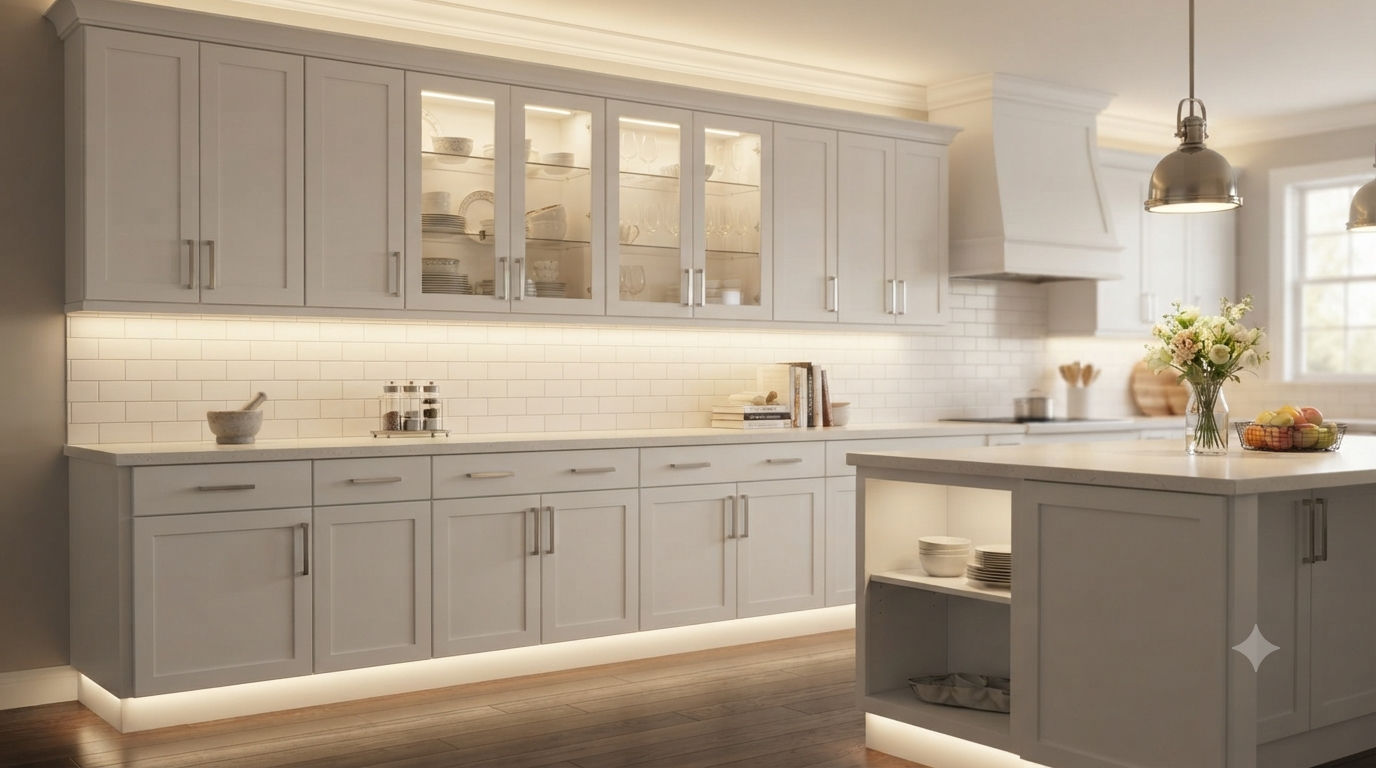
A ceiling fixture provides general illumination, while under-cabinet lighting handles countertop tasks.
Don't expect one ceiling bulb to illuminate every work surface effectively.
Bathroom
- Recommended
- 3500K–5000K
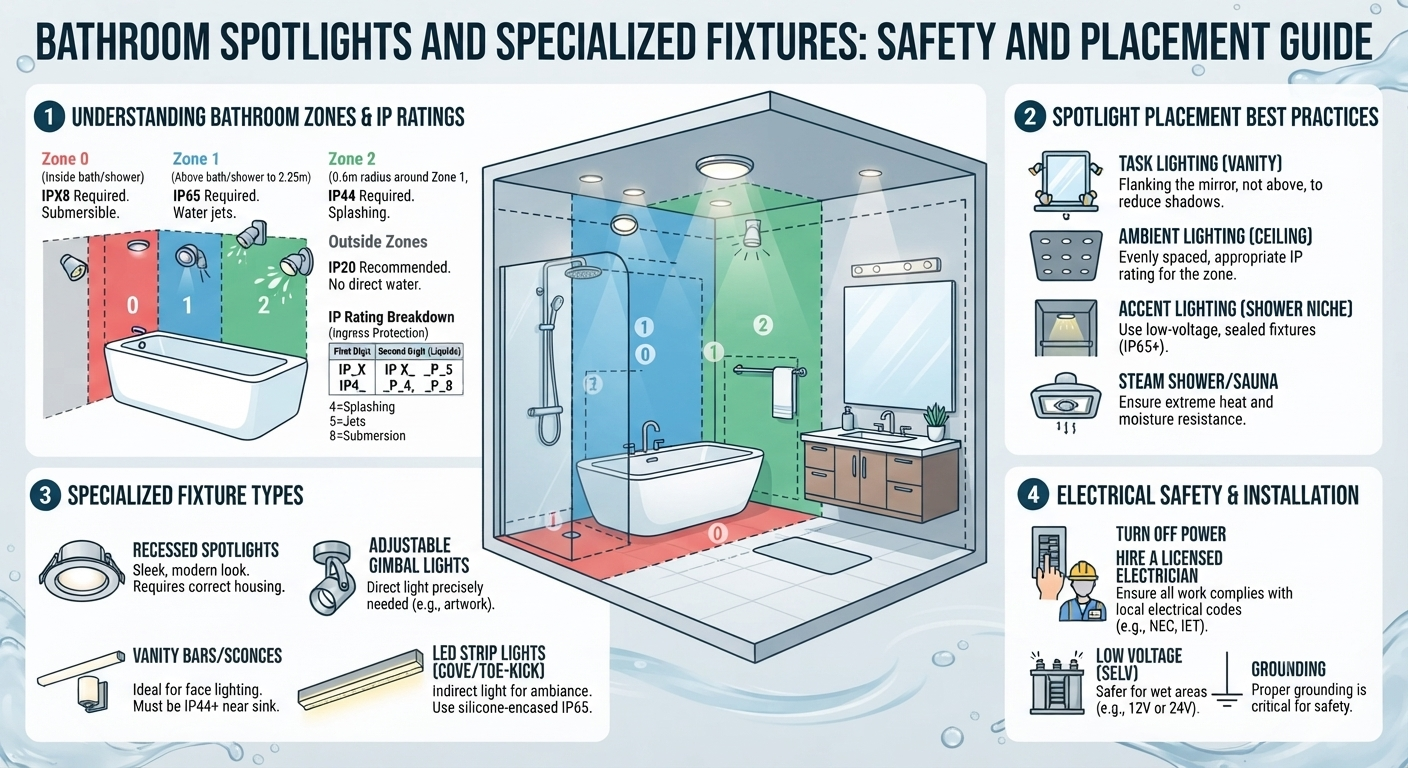
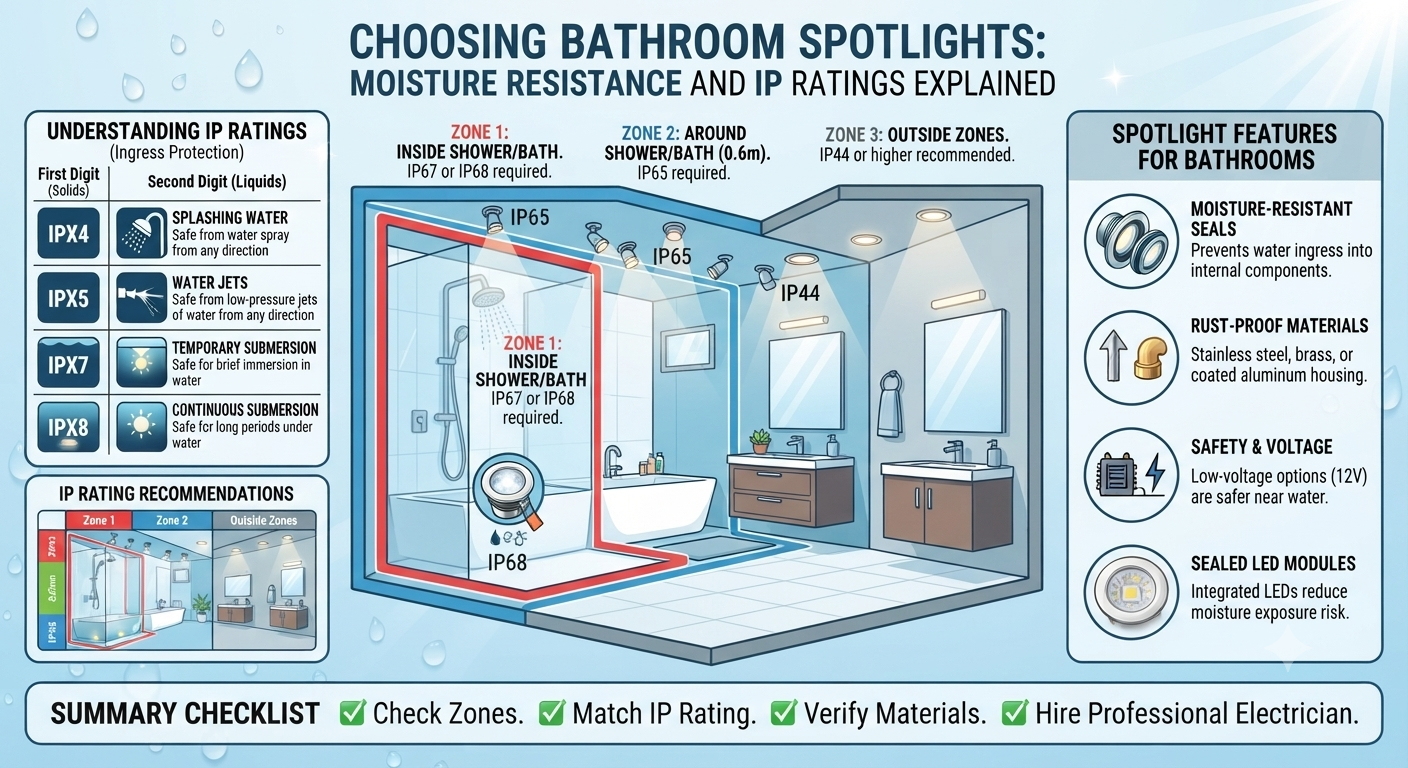
Choose fixtures appropriate for the bathroom's installation zones and moisture exposure.
For mirrors, use dedicated vertical or integrated task lighting where possible.
Entrance Hall
- Recommended
- 2700K–3500K
A chandelier can create a dramatic entrance if the ceiling is high.
For low ceilings, choose a flush or semi-flush fixture.
Common Ceiling Lighting Mistakes
- Choosing Wattage Instead of Lumens
A higher wattage doesn't necessarily mean better lighting.
Using One Fixture for Every Purpose
Ambient, task, and accent lighting serve different functions.
Ignoring Ceiling Height
The wrong fixture can make a room feel cramped.
Installing a Chandelier That Is Too Large
The fixture can dominate the room rather than complement it.
Choosing the Wrong Color Temperature
A 6500K fixture may look harsh in a warm residential living room.
Ignoring Glare
High-output LEDs can be uncomfortable if the light source is directly visible.
Buying a Cheap Integrated LED Fixture
If the driver fails, the entire fixture may require service.
Forgetting Dimming Compatibility
Not every LED fixture works with every dimmer.
A Practical Buying Checklist
- Before purchasing an LED ceiling light or chandelier, check
- Lumen output
- Wattage
- Lumens per watt
- Color temperature
- CRI
- Beam angle
- Dimming compatibility
- Driver quality
- Fixture dimensions
- Ceiling height
- Installation method
- Warranty
- Expected operating life
- Replacement parts availability
For an integrated LED chandelier, also ask whether the driver and LED module can be replaced independently.
This can make a significant difference to long-term maintenance costs.
Frequently Asked Questions
- Are LED ceiling light bulbs better than traditional bulbs?
In most general lighting applications, LED bulbs offer significant advantages in energy efficiency, operating life, and maintenance compared with incandescent and halogen bulbs. They also provide more options for color temperature and dimming. The quality of the bulb and fixture still matters, however.
Is an LED chandelier bright enough to light a whole room?
It depends on the fixture's total lumen output and optical design. Some LED chandeliers provide excellent general illumination, while others are primarily decorative. For larger rooms, combining a chandelier with recessed downlights, wall lights, or other fixtures can provide more uniform illumination.
What color temperature is best for a ceiling bulb?
For bedrooms and living rooms, 2700K–3000K warm white is generally comfortable. Kitchens and offices often benefit from 3500K–4500K neutral white. Cooler 5000K–6500K lighting is more suitable for garages, workshops, and specific task-oriented environments.
Are integrated LED chandeliers better than chandeliers with replaceable bulbs?
Integrated LED chandeliers can offer slimmer designs, better optical control, and excellent energy efficiency. However, replaceable-bulb chandeliers are often easier to maintain because individual lamps can be replaced. The better choice depends on your priorities, fixture quality, and long-term maintenance expectations.
Final Takeaway: Choose Lighting That Fits the Room
The choice between LED ceiling light bulbs and an LED chandelier shouldn't be based solely on appearance or price.
Start with the room's lighting requirements.
For bedrooms, utility spaces, and simple residential applications, a quality ceiling bulb or flush-mount LED fixture may provide all the illumination you need. For dining rooms, entrance halls, and larger decorative spaces, a well-designed led chandelier can combine practical lighting with a strong visual statement.
Whichever option you choose, evaluate lumens, wattage, color temperature, CRI, beam angle, driver quality, dimming compatibility, and ceiling height.
For the best results, think beyond a single light source. Combine ambient ceiling lighting with task and accent lighting where appropriate. A kitchen may need a ceiling fixture plus under-cabinet LEDs. A living room may benefit from ceiling lighting alongside floor and wall lamps.
Modern ceiling lighting works best when it is designed as a complete system.
Choose the fixture for the room, choose the light for the task, and choose the technology for long-term performance.